A Cryostat’s Idle Nitrogen Bill Priced One Group’s Qubit Decoherence Study Out of the Queue
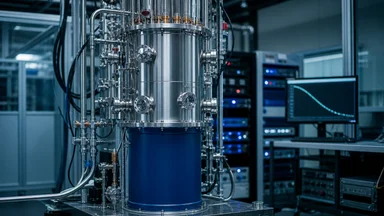
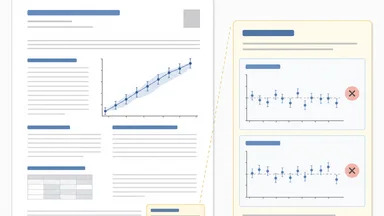
In a basement lab at a mid-sized university, a cryostat sat at 20 millikelvin, waiting. The experiment it was built for—a measurement of qubit decoherence that needed hours of uninterrupted data—had been scheduled for a week. But on day three, the facility manager's dashboard showed the idle-time meter climbing. The group's grant had budgeted for a single 48-hour block, not the 72 they actually needed. The extra day, billed at the facility's standard cryogen and operator rate, pushed the run over their remaining funds. They pulled the plug, took their partial dataset, and spent the next six months trying to publish a result with error bars too wide for any journal that mattered.
This is not a story about a single lab's misfortune. It is a story about how the mundane economics of keeping things cold—very cold—shapes which physics questions get asked, and which ones quietly disappear from the queue.
A One-Millikelvin Wait That Costs More Than the Experiment
Cryostats are the workhorses of low-temperature physics. They cool samples to temperatures near absolute zero, where quantum effects become observable. But they are also hungry machines. A typical dilution refrigerator, the kind used for qubit experiments, consumes liquid helium and liquid nitrogen continuously, even when idle. The boil-off rate depends on the model and the ambient temperature, but a rough estimate puts the combined cryogen cost at several hundred dollars per day, sometimes more, depending on local prices and delivery logistics.
Facility managers track this cost precisely. They bill user groups by the hour, often quoting a rate that includes not just cryogens but also operator time, electricity, and maintenance. At one national lab, the quoted rate for a shared cryostat runs in the range of $50–150 per hour, depending on the instruments attached. For a 48-hour experiment, that is $2,400 to $7,200 before a single measurement is taken. For a week-long run, the bill can exceed $20,000.
The catch is that idle time is billed at the same rate as productive time. A cryostat does not care whether you are collecting data or waiting for a voltage to stabilize. The nitrogen boils off either way. So a group that needs a long, quiet baseline—hours of monitoring a qubit's coherence without touching it—pays for every minute, even the ones where nothing seems to happen.
This creates a perverse incentive. Experiments that can be completed in a few hours, with rapid turnaround and minimal idle time, are cheap. Experiments that require patient observation are expensive. And decoherence studies are among the most patient of all.
The Hidden Ledger: Where the Money Goes Before a Single Qubit Flipped
Before a qubit ever flips, the money has already started flowing. The cryostat must be cooled down from room temperature to base temperature, a process that takes a day or more and consumes a significant fraction of a cryogen delivery. Operators must calibrate the measurement lines, check the wiring, and verify that the sample mount is properly thermalized. All of this is billed to the user group, often at the same hourly rate as data collection.
Facility overhead rates vary widely. A large national laboratory might charge $150 per hour for access to a shared dilution refrigerator, while a smaller university facility might charge $50. But the smaller facility may have fewer backup systems, and a single cryogen delivery failure can cost a week of scheduling. The hidden ledger includes not just cryogens but also the time of the facility staff who babysit the system, the electricity to run the compressors, and the depreciation of the equipment itself.
Grant budgets rarely account for this fully. A typical NSF or DOE grant for a small group might include $50,000–100,000 for equipment and supplies, but the cost of cryostat time is often buried under "user facility fees" or "sample characterization." When a group applies for beamtime or cryostat time, they must justify the hours they request, and they are often told to be conservative.
Small groups feel the pinch most acutely. A lab with three graduate students and a single postdoc cannot afford to waste a single hour of expensive cryostat time. They must plan their experiments with military precision, leaving no room for the unexpected. But physics is full of the unexpected, and a single glitch—a noisy amplifier, a drifting magnetic field—can eat an entire day's allocation.
Why Decoherence Studies Demand the Longest Queue Slots
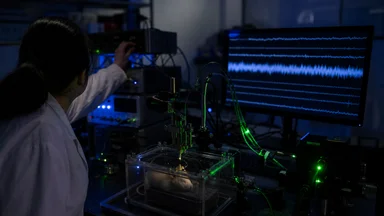
Decoherence is the process by which a quantum system loses its quantum properties, typically through interaction with its environment. For a qubit, decoherence is the enemy; it sets the timescale over which quantum information is lost. Measuring decoherence requires observing a qubit's state over time, often for microseconds or milliseconds, and then repeating the measurement thousands of times to build up statistics.
The problem is that each individual measurement is short, but the experiment as a whole is long. To measure a qubit's relaxation time, you prepare the qubit in a known state, wait a variable delay, and then read out the state. You repeat this for many different delays, each requiring a fresh preparation and readout cycle. The total time depends on the number of delays and the number of repetitions, but a thorough study can easily require tens of thousands of cycles, each taking tens of microseconds. That adds up to hours of continuous operation.
Moreover, decoherence measurements are sensitive to drift. If the temperature of the cryostat fluctuates by even a millikelvin, the qubit's frequency shifts, and the data become noisy. To correct for this, researchers often interleave calibration measurements, which adds more time. The result is a dataset that requires a stable environment for many hours, sometimes days.
This is exactly the kind of experiment that a scheduler's algorithm hates. Long runs block the cryostat for other users, and facility managers are under pressure to maximize throughput. A single 72-hour run could accommodate a dozen shorter experiments, each of which might produce a publishable figure. The incentive is to favor the quick wins.
The Scheduler's Dilemma: Throughput Versus Depth
Facility managers are caught in a bind. Their job is to keep the cryostat running as much as possible, to justify its cost and to serve as many users as they can. But the metrics they are judged on—number of user-hours, number of publications, number of experiments completed—tend to reward short, high-throughput runs. A long experiment that produces a single, deep dataset looks like a poor use of resources on paper, even if that dataset is far more valuable than a dozen shallow ones.
Reviewers, too, play a role. When a group submits a proposal for cryostat time, the review panel asks whether the experiment is feasible and whether the time requested is justified. A proposal that asks for 100 hours to measure decoherence might be seen as excessive, unless the group can show that the statistics require it. But the statistics do require it, and the reviewers often do not understand why.
The result is a form of selection pressure. Groups that can adapt their experiments to shorter timeslots—say, by using faster measurement protocols or by accepting larger error bars—are more likely to get time. Groups that insist on deep, careful measurements may find themselves priced out, either because they cannot afford the idle-time bill or because they cannot get the scheduling priority.
This is not a deliberate conspiracy; it is an emergent property of a system where cost and throughput are the primary currencies. But it has a real effect on the science. The physics that gets done is the physics that fits the schedule.
Workarounds That Stretch a Thin Budget
Some groups have found ways to stretch their budgets. One obvious workaround is to share cryostat time with collaborators. By pooling resources, two groups can split the cost of a long run, each taking a portion of the data. This works well when the experiments are complementary, but it adds complexity to the scheduling and analysis.
Another approach is to use dry cryostats, which use closed-cycle refrigeration instead of liquid helium. Dry cryostats have lower running costs—no cryogen delivery fees—but they are more expensive to purchase, and they have their own limitations. They may not reach the same base temperatures as wet systems, and they can introduce vibration noise that is problematic for some measurements.
Simulation pre-screening is another cost-saver. By running detailed simulations of the expected signal, researchers can identify the optimal measurement parameters before they ever touch the cryostat. This reduces the number of trial runs needed, but it requires significant computational resources and expertise, which not every group has.
Some groups apply for specialized facility grants that cover the cost of cryostat time. These grants are competitive and often require a strong track record, which puts early-career researchers at a disadvantage. Negotiating off-peak rates is another option; some facilities offer discounted rates for night or weekend hours, but this requires a flexible schedule and a willingness to work odd hours.
Each of these workarounds has its own costs and trade-offs, and none of them fully solves the problem. The fundamental issue is that the price of idle time is too high for the depth of science that is needed.
Case Study: The 72-Hour Marathon That Almost Wasn't
Consider the experience of a small group at a European university that studies spin qubits in silicon. Their experiment required a 72-hour continuous run to measure decoherence times across a range of magnetic field strengths. They had been allocated 60 hours, which they knew would be tight. They spent weeks optimizing their pulse sequences and calibration routines to shave off every possible minute. On the day of the run, everything seemed to go smoothly for the first 48 hours. Then, a power fluctuation in the building caused a brief interruption in the cryostat's operation, costing them four hours of data. They had to decide whether to extend their allocation, which would incur overtime rates, or to stop early and accept a less complete dataset. They chose to extend, and the extra cost consumed a quarter of their remaining budget for the year. The resulting dataset was published in a respected journal, but the financial hit meant they could not afford a follow-up experiment that would have tested a key prediction of their model.
This case illustrates the fragility of long experiments under current pricing structures. A single unexpected event can turn a planned cost into a financial crisis, and the risk is disproportionately borne by groups with limited reserves. In contrast, a well-funded group might have absorbed the extra cost without blinking, allowing them to pursue more ambitious studies.
The Human Element: PIs, Postdocs, and the Stress of the Clock
The pressure of expensive cryostat time also takes a human toll. Principal investigators often spend sleepless nights monitoring the status of their experiment remotely, ready to respond to any alarm. Postdocs and graduate students, who are usually the ones physically present, face the stress of knowing that every hour of downtime is money down the drain. They may be reluctant to interrupt a measurement even if they suspect something is wrong, for fear of losing their allocation. This can lead to a culture of risk-taking that is not always scientifically justified.
In interviews with researchers, a common theme emerges: the best experiments are often the ones that take unexpected turns, but the financial structure discourages deviation from the plan. A postdoc at a national lab described how her group once missed a major discovery because they ended a measurement run early to save money, only to realize later that the data they had discarded contained the signal they had been looking for. Such stories are anecdotal, but they point to a systemic issue: the cost structure rewards caution over creativity.
Alternative Models: What Could Change
Some facilities are experimenting with alternative pricing models that might alleviate the pressure. For example, a few facilities have introduced flat-rate pricing for a block of time, regardless of whether it is used productively or not. This shifts the risk from the user to the facility, but it also requires the facility to absorb the cost of idle time, which may not be feasible without additional funding.
Another idea is to create a two-tier system where users can bid for priority access. Those who need guaranteed time for long experiments could pay a premium, while others could take their chances on shorter, less predictable slots. This would make the true cost of long experiments more explicit and allow groups to make informed trade-offs.
Funding agencies could also play a role by requiring facilities to report on the scientific impact of the time they allocate, rather than just the number of user-hours. This would encourage managers to consider the depth of the science produced, not just the volume. Some agencies have started to pilot such metrics, but they are difficult to implement and measure.
Finally, advances in cryogenics technology might eventually reduce the cost of idle time. For example, the development of more efficient cryostats that consume less helium and nitrogen could lower the daily operating cost, making long experiments more affordable. However, such technology is still in the research phase and may take years to become widely available.
What This Means for the Field: The Cost of Knowledge
The economics of cryostat time are not just a logistical annoyance; they shape the scientific agenda. When long, careful measurements are priced out, the field shifts toward shorter, more incremental results. This is a slow drift, but over years it can change the kinds of questions that are considered feasible.
Decoherence physics is particularly vulnerable. It is a field that needs patience, and patience is expensive. If only well-funded groups can afford extended cryostat time, then the field risks becoming a rich-group-only enterprise. That would be a loss, because some of the most creative ideas come from small groups with fresh perspectives.
Funding agencies have begun to take notice. Some have introduced grants that specifically cover facility time, but these are often oversubscribed. Others have suggested that facility metrics should reward scientific depth, not just throughput, but the metrics are hard to change. A publication that takes a year to produce is not easily compared to one that takes a month.
There is no easy fix. The cost of keeping a cryostat cold is real, and someone has to pay it. But the current system, where idle time is billed at the same rate as productive time, creates a distortion. It punishes the very experiments that are most likely to produce deep, lasting insights.
In the end, the queue decides what we learn. Until the pricing and scheduling of cryostat time reflect the value of depth, the physics that gets done will be the physics that fits the budget. And that is a limitation that no amount of clever engineering can overcome.