A Palladium Catalyst's Batch-to-Batch Variance Spawned Two Divergent Hydrogenation Kinetics Models
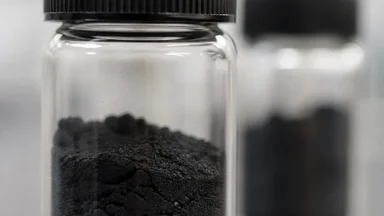
In the early 2010s, two laboratories independently set out to measure the kinetics of a common hydrogenation reaction. Both used the same workhorse catalyst: palladium on carbon, a fine black powder that speeds up hydrogenations in everything from pharmaceutical synthesis to edible oil processing. Both reported careful experiments, controlled temperatures, and identical nominal conditions. Yet one lab saw the reaction rate rise linearly with hydrogen pressure, while the other saw it plateau. The disagreement simmered in conference question-and-answer sessions for years, with each side suspecting the other's technique. The resolution, when it came, was not a matter of who was right. It was a matter of the catalyst itself.
A Catalyst That Wouldn't Sit Still
Palladium on carbon, or Pd/C, is a classic heterogeneous catalyst: tiny palladium nanoparticles dispersed on a high-surface-area charcoal support. It is cheap, versatile, and forgiving enough that many chemists treat it as a black box. A typical recipe calls for "5% Pd/C," a nominal loading that suggests a uniform, well-defined material. In practice, the catalyst is a batch product, and batches differ.
Early reports of batch-to-batch drift appeared sporadically in the literature. Some groups noted that a fresh bottle of catalyst gave faster reactions than an older one. Others saw the opposite. The usual suspect was the support: charcoal is a natural material, and its pore structure and surface chemistry vary from source to source. Suppliers tried to standardize, but the variability persisted. No one had isolated the specific variables that mattered.
The problem was not merely academic. Hydrogenation kinetics underpin process design in the pharmaceutical and fine chemical industries. If two labs cannot agree on the rate law, they cannot scale up a reaction reliably. The disagreement between Lab A and Lab B was more than a curiosity; it was a practical headache for anyone trying to reproduce their work.
For a while, the field coped by treating kinetics as a local phenomenon. Each lab calibrated its own catalyst and its own reactor, and results were compared only within a single batch. This pragmatic approach worked, but it left a nagging question: what was the catalyst actually doing?
Two Labs, Two Kinetic Signatures
Lab A, at a European university, reported that their hydrogenation of a model alkene was first-order in hydrogen pressure. Doubling the hydrogen pressure doubled the rate. This is the classic behavior expected when hydrogen adsorption is the rate-limiting step and the surface is far from saturated.
Lab B, at a North American institute, saw something different. Over a similar pressure range, their reaction rate was essentially independent of hydrogen pressure. This zero-order behavior suggests a surface saturated with hydrogen, or a different rate-limiting step, perhaps the surface reaction between adsorbed species.
Both groups used commercial Pd/C from the same major supplier, with the same nominal 5% loading. Both used similar solvents, temperatures, and stirring rates. They exchanged notes and could find no procedural difference. The discrepancy was reproducible within each lab but not across them.
Conference exchanges grew pointed. One group suggested the other's mass transfer was poor. The other countered that the first had poisoned their catalyst. The dispute was never resolved in public, but it prompted a few researchers to dig deeper.
To understand the stakes, consider a concrete example from pharmaceutical process development. In the synthesis of a common blood-pressure medication, a key step involves the hydrogenation of an intermediate alkene. The process chemist relies on a rate law to design the reactor and predict the hydrogen uptake over time. If the catalyst behaves as first-order, a modest increase in pressure can cut the reaction time significantly. If it behaves as zero-order, pressure changes have little effect, and the chemist must instead adjust temperature or catalyst loading. Getting this wrong can lead to under- or over-engineered equipment, wasted material, and delayed timelines. The cost of a single failed batch in a late-stage clinical campaign can run into the hundreds of thousands of dollars, not counting the opportunity cost of a delayed drug approval.
The Metal Loading Puzzle
The first clue came from elemental analysis. Inductively coupled plasma mass spectrometry, or ICP-MS, is a standard technique for measuring metal content. When applied to samples from several bottles of the same nominal 5% Pd/C, the results varied more than expected.
One bottle measured 4.2% palladium by weight. Another came in at 5.8%. The nominal value was 5%, but the actual loading swung by more than a percentage point. That is a 30% relative variation, large enough to shift reaction rates by a factor of two or three in a first-order regime.
Loading alone, however, did not explain the kinetic difference. Lab A's bottle was on the low end, Lab B's on the high end, yet the direction of the kinetics did not correlate simply with loading. Something else was at play.
The next suspect was dispersion: the fraction of palladium atoms exposed on the surface of the nanoparticles, available for catalysis. Smaller particles have higher dispersion. Measurements using carbon monoxide chemisorption revealed that dispersion varied from about 15% to 35% across batches. A low-dispersion catalyst has fewer active sites per gram, but those sites may be more active on a per-site basis.
Small changes in dispersion produced outsized effects on kinetics. In one series of tests, a catalyst with 20% dispersion showed first-order behavior, while a 30% dispersion sample showed zero-order behavior at the same hydrogen pressures. The transition was sharp, suggesting a threshold effect.
Dispersion is not a fixed property; it can change during the reaction. Sintering, the coalescence of nanoparticles into larger ones, occurs at elevated temperatures and can be accelerated by the exothermic nature of hydrogenation. Even at moderate conditions, a catalyst that starts with high dispersion may lose it over the course of a reaction, shifting the kinetics mid-run. This dynamic behavior adds another layer of complexity to interpreting kinetic data. Some researchers have proposed using in-situ characterization techniques, such as X-ray absorption spectroscopy, to monitor dispersion changes in real time, but these methods are not yet routine.
Poisoned by a Trace Impurity
Dispersion explained some of the variance, but not all. Two batches with nearly identical dispersion still gave different rate laws. The culprit turned out to be trace impurities, present at parts-per-million levels.
Sulfur and chloride are common contaminants in palladium catalysts. They can come from the precursor salts used in synthesis or from the support itself. Even a few hundred parts per million of sulfur can adsorb strongly onto palladium surfaces, blocking active sites and altering the electronic environment of neighboring atoms.
In the disputed batches, ICP-MS and combustion analysis found sulfur levels ranging from 50 to 300 parts per million and chloride from 100 to 500 parts per million. The impurity profile correlated with the observed kinetics: batches with higher sulfur tended toward zero-order behavior, while cleaner batches showed first-order kinetics.
The mechanism, proposed in a 2018 paper, is that impurity adsorption effectively reduces the number of sites available for hydrogen. When many sites are blocked, the remaining sites saturate at lower hydrogen pressures, pushing the system into a zero-order regime. A clean catalyst, with more available sites, stays in the first-order regime over a wider pressure range.
One lab's "clean" catalyst was not clean at all. The supplier had not guaranteed impurity levels, and the batches shipped with different profiles depending on the production run.
Impurity effects are not limited to sulfur and chloride. Other common poisons include phosphorus, arsenic, and heavy metals like lead or bismuth, which can be introduced during the synthesis of the precursor or leached from the reactor walls. Even trace amounts of oxygen or water can affect the catalyst's surface chemistry, especially under reducing conditions. The interplay between different impurities is complex; a catalyst with moderate sulfur but high chloride might behave differently than one with the reverse. This makes it difficult to predict kinetics from a single impurity measurement alone.
The Role of the Support
While much of the attention focused on the metal, the carbon support itself proved to be a variable. Activated carbon is produced from a variety of sources — wood, coconut shells, peat, coal — and the activation process can leave behind residual inorganic oxides and alter the surface functional groups. These groups, such as carboxylic acids, phenols, and lactones, can interact with the metal nanoparticles, affecting their electronic properties and dispersion stability.
In a series of experiments, researchers treated a batch of Pd/C with acid to remove some of these surface groups. The treated catalyst showed a higher initial dispersion and a shift toward first-order kinetics, even though the metal loading and impurity levels were unchanged. This suggested that the support's surface chemistry modulates the catalyst's behavior in ways that are not captured by the nominal specifications.
Suppliers often specify the surface area of the carbon, typically in the range of 800 to 1,500 square meters per gram, but they rarely report the distribution of pore sizes or the concentration of acidic sites. These properties can vary significantly between production runs, affecting how the palladium is deposited and how the catalyst performs. The interaction between the support and the metal is a delicate balance; too much acidity can lead to metal leaching, while too little can result in poor dispersion.
The support's role also complicates the comparison of catalysts from different suppliers. Even if two catalysts have the same nominal loading and dispersion, their supports may differ in ways that alter kinetics. This is a lesson for anyone who switches suppliers: a catalyst that works well in one context may not behave the same in another, even if the label looks identical.
A Unified Model Emerges
In 2021, a group that had been following the dispute published a revised kinetic model that incorporated both dispersion and impurity coverage. The model treats the active site density as a variable, not a constant, and allows the rate law to switch order as that density changes.
The key insight was that the rate law is not an intrinsic property of the reaction, but a consequence of the catalyst's surface state. At high effective site density, the system behaves as first-order in hydrogen. At low site density, it drifts toward zero-order.
The model was tested against both Lab A's and Lab B's original datasets. The fits were good, with residual errors comparable to experimental noise. The two datasets, once seemingly contradictory, fell onto the same curve when plotted against effective site density.
The unified model does not claim that all hydrogenations behave this way. It applies to the specific alkene and conditions studied. But it offers a framework for understanding why batch-to-batch variance can produce qualitative differences in kinetics.
One of the model's strengths is its simplicity. It introduces a single parameter, the effective site density, which can be estimated from dispersion and impurity measurements. This makes it practical for industrial chemists who need to predict reactor performance without extensive mechanistic studies. However, the model has its limitations. It assumes that the rate law switches abruptly at a critical site density, but in reality, the transition may be gradual. It also does not account for the possibility of multiple types of active sites with different affinities for hydrogen. Some researchers have proposed more complex models with two or more site types, but these require additional parameters and are harder to fit to limited data.
The debate over the model's details is healthy. It reflects the field's growing appreciation for the complexity of heterogeneous catalysts. The unified model is not the final word, but it is a step forward in making sense of a messy reality.
What This Means for Reproducibility
The story is a cautionary tale for reproducibility in catalysis. Commercial catalysts are not uniform reagents; they are complex materials with batch-specific properties. Reporting only the nominal metal loading is no longer sufficient.
Researchers are increasingly urged to characterize their catalysts before use: measure actual metal loading, dispersion, and impurity levels. Journals are starting to require such data, at least for new catalysts. The field is moving toward a standard of reporting that includes batch numbers and characterization results.
Control experiments with the same lot number are advisable when comparing results across labs. Some groups have begun sharing raw kinetic traces in preprints, so that others can re-analyze the data without re-running the experiments.
Community guidelines, perhaps modeled on the reporting standards in other areas of materials science, may follow. The goal is not to eliminate batch variance, which is inevitable, but to make it visible and accounted for.
There is, however, a counter-argument. Some researchers worry that requiring extensive characterization will impose a heavy burden on synthetic chemists, who may not have access to specialized equipment. They argue that the nominal loading is often sufficient for routine applications, and that over-regulation could stifle innovation. This tension is a familiar one in science: the need for rigor versus the need for efficiency. A middle ground might be to require basic characterization — loading and dispersion — while making impurity data available upon request.
Another practical suggestion is the use of internal standards. If a lab is comparing results across different batches, they can run a reference reaction with a well-characterized catalyst under standard conditions. This provides a baseline for normalizing kinetic data and identifying batch effects. Some large pharmaceutical companies have already adopted this practice internally, and it could be extended to academic collaborations.
The two labs that started the dispute eventually co-authored a joint paper, presenting the unified model. Their collaboration was not a triumph of one side over the other, but a recognition that both had been measuring a moving target.
The lesson for anyone working with catalysts is simple: know your catalyst. The palladium on carbon in your bottle may not be the same as the one in your colleague's bottle, even if the label says otherwise. The kinetics you measure are a property of that specific material, not of the reaction in general.
This episode echoes a similar lesson from a pilot plant's catalyst deactivation data, where operational variability forced a rewrite of scale-up manuals. And the broader theme of contested results leading to deeper understanding is familiar to readers of the bystander effect's replication debates. In both cases, the path forward required acknowledging that the initial experiments were not wrong, but incomplete.