Atrial Fibrillation Strikes Younger in Poorer Neighbourhoods Yet Care Lags in the Same Postal Codes
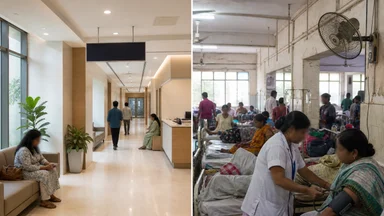
Atrial fibrillation, the most common sustained heart rhythm disorder, does not distribute itself evenly across a city. In affluent postal codes, a person might first learn of the condition during a routine check-up that includes a pulse check or a wearable ECG. In poorer neighbourhoods, the same arrhythmia often goes unnoticed until it announces itself as a stroke. The difference is not merely a matter of awareness; it is etched into the structure of healthcare itself.
The Same Heartbeat, Different Prognosis
Population-level data from several countries now point to a troubling pattern: the age of first atrial fibrillation diagnosis is roughly a decade earlier in the most deprived neighbourhoods compared with the most affluent. A study published in the European Heart Journal in 2022, drawing on Danish nationwide registries, found that the median age at first diagnosis was about 68 in the lowest income quintile versus 75 in the highest. Similar gradients appear in England, Canada, and the United States. This is not a small statistical blip; it means that a 55-year-old factory worker in a low-income district has a higher risk of developing AFib than a 65-year-old executive in a leafy suburb.
Poverty shapes the rhythm itself, not just the lifestyle that precedes it. Chronic stress, untreated hypertension, and poor sleep are all more common in deprived areas, and each contributes to the electrical remodelling of the atria that makes AFib more likely. But the trajectory after diagnosis diverges even more sharply. In affluent areas, a new AFib patient typically sees a cardiologist within weeks, receives anticoagulation to prevent stroke, and may be offered a catheter ablation to restore sinus rhythm. In poorer areas, the same patient might wait months for a specialist, be prescribed aspirin instead of a modern blood thinner, and never hear the word ablation.
The consequences are measurable in strokes. A 2021 analysis of Medicare claims in the United States found that the rate of stroke among patients with newly diagnosed AFib was about 30% higher in the lowest-income zip codes than in the highest, even after adjusting for age, sex, and comorbidities. Some of that excess is due to underuse of oral anticoagulants, but part is also attributable to delayed detection: a person who has silent AFib for years is more likely to have a stroke before the arrhythmia is ever recorded.
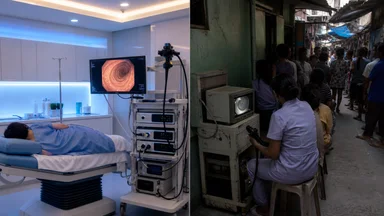
Inequity is etched into cardiac care at every step, from the initial suspicion to the long-term management. The same heartbeat, in different postal codes, leads to different outcomes. The sections below trace how the diagnostic gap widens, what happens when referrals stall, why ablation remains a procedure for the privileged, and what practical interventions could narrow the divide.
Why Wealth Buys Time Before the First Episode
The conventional explanation for the socioeconomic gradient in AFib is that poorer people smoke more, drink more, and exercise less. Those factors matter, but they do not fully account for the decade shift in onset. Chronic stress acts directly on the heart. Cortisol and catecholamines, released in response to financial strain, job insecurity, and neighbourhood violence, can promote atrial fibrosis and inflammation, creating the substrate for arrhythmia. A 2020 review in Nature Reviews Cardiology concluded that psychosocial stress is an independent risk factor for incident AFib, with a hazard ratio comparable to that of obesity.
Hypertension is the single most important modifiable risk factor for AFib, and it is both more common and less controlled in low-income populations. In the United States, the age-adjusted prevalence of hypertension is roughly 40% in adults with incomes below the poverty line, versus about 25% in those with incomes above 400% of the poverty line. Even when diagnosed, blood pressure control is worse: a 2019 study in Circulation found that only 40% of low-income patients achieved target systolic readings, compared with 60% of high-income patients. The reasons include cost of medications, clinic hours that conflict with shift work, and a shortage of primary care physicians in underserved areas.
Diet, noise, and sleep deprivation compound the risk. Poorer neighbourhoods have fewer supermarkets and more fast-food outlets, making a heart-healthy diet harder to sustain. Chronic noise from traffic and industry has been linked to a higher incidence of AFib, possibly through activation of the sympathetic nervous system. Sleep apnea, a strong trigger for AFib, is more prevalent in lower-income groups, partly due to higher rates of obesity and partly due to undiagnosed or untreated obstructive sleep apnea. The cumulative effect is a cardiovascular system that is more vulnerable to rhythm disturbance.
Access to screening varies by zip code. In affluent areas, a person might wear a smartwatch that detects irregular pulses, or receive an ECG during an executive physical. In poorer areas, opportunistic pulse checks are rare in busy public clinics, and the idea of wearing a consumer device for health monitoring is often financially out of reach. The result is that AFib is more likely to be discovered incidentally, often at an advanced stage or after a complication.
The Diagnostic Gap: Who Gets Monitored and Who Gets Missed
Wearable ECGs are abundant in affluent suburbs. Devices like the Apple Watch and the KardiaMobile have made it possible for anyone to record a single-lead ECG in seconds. A 2023 survey by the Pew Research Center found that about 30% of adults with annual household incomes above $100,000 own a smartwatch, compared with 12% of those earning under $30,000. This is not a trivial difference. A person who feels palpitations can capture an episode immediately and bring the tracing to their doctor. In poorer communities, the same symptom might be dismissed as anxiety or stress, and the patient may not have the tools to document it.
Opportunistic pulse checks, a low-tech and inexpensive screening tool, are rarely performed in busy public clinics. A 2022 study in the British Journal of General Practice observed consultations in 20 general practices in deprived areas of London and found that pulse checks were performed in only 4% of eligible consultations, compared with 15% in more affluent practices. The reasons cited by clinicians included time pressure, lack of training, and the perception that patients would not follow up on an abnormal finding. Yet a simple pulse check, followed by a 12-lead ECG if irregular, can detect AFib with reasonable sensitivity.
Symptoms in younger patients are particularly prone to being dismissed. A 35-year-old with palpitations and fatigue, living in a low-income area, might be told it is anxiety or the result of a demanding job. The same symptoms in a 65-year-old executive would likely trigger an ECG and a cardiology referral. This age bias means that early-onset AFib, which is already more common in deprived areas, is even less likely to be diagnosed promptly. A 2018 study in the Journal of the American Heart Association found that the median time from first symptom to diagnosis was 6 months in high-income patients but 18 months in low-income patients.
Silent AFib, which causes no symptoms at all, is a major contributor to the diagnostic gap. It is estimated that about one-third of AFib episodes are asymptomatic. In affluent populations, these are often picked up incidentally during a routine ECG or a pre-operative assessment. In poorer populations, the first sign is frequently an ischemic stroke. A 2020 study in Stroke found that among patients hospitalized for stroke, those from the lowest-income quartile were 40% more likely to have undiagnosed AFib than those from the highest quartile. The tragedy is that a cheap blood test or a daily pulse check could have prevented many of these strokes.
Referral Delays and the Anticoagulation Divide
Once AFib is diagnosed, the next step is usually a referral to a cardiologist or an electrophysiologist. In many health systems, this is where the gap widens further. Public hospitals in deprived areas often have longer waiting times for specialist appointments. In the United Kingdom, for example, the median wait for a first cardiology outpatient appointment in 2024 was about 8 weeks in the most affluent areas but 14 weeks in the most deprived, according to data from the British Heart Foundation. In the United States, a 2023 report from the American College of Cardiology noted that patients with Medicaid or no insurance faced waits of up to 6 months for an electrophysiology consultation, while privately insured patients often waited less than a month.
The anticoagulation divide is even more stark. Direct oral anticoagulants (DOACs) such as apixaban and rivaroxaban are the standard of care for stroke prevention in AFib, but they are expensive. A 2022 analysis of Medicare Part D data found that the rate of DOAC prescription among low-income patients was 15 percentage points lower than among high-income patients, despite similar indications. Instead, many low-income patients receive aspirin, which is far less effective for AFib-related stroke prevention. The reasons include out-of-pocket costs, formulary restrictions, and clinician concerns about adherence.
Fear of bleeding often outweighs stroke prevention in discussions with low-income patients. DOACs carry a small risk of major bleeding, and patients who are worried about the cost of managing a bleed, or who have limited access to emergency care, may be more reluctant to start them. A 2021 qualitative study in Health Affairs interviewed patients in a public hospital clinic and found that many viewed blood thinners as a threat to their already precarious finances. One patient said, 'If I bleed, I can't afford to go to the hospital.' This is a rational response to a system that does not provide a safety net.
Lack of follow-up leads to therapy abandonment. Even when a DOAC is prescribed, adherence often wanes over time. In affluent areas, patients may have a pharmacist who calls to remind them to refill, or a cardiology nurse who monitors their INR if they are on warfarin. In poorer areas, there may be no such support. A 2023 study in Circulation: Cardiovascular Quality and Outcomes found that the proportion of patients who discontinued their DOAC within 12 months was 28% in the lowest-income quartile versus 15% in the highest. The reasons included cost, side effects, and a lack of understanding about the medication's purpose.
Catheter Ablation: A Procedure for the Privileged
Catheter ablation, a procedure that uses heat or cold to destroy the tiny areas of heart tissue triggering the abnormal electrical signals, is the most effective treatment for many patients with AFib. Yet it is disproportionately performed on affluent patients. A 2022 study in the Journal of the American College of Cardiology, using data from the National Inpatient Sample, found that the rate of ablation was 2.5 times higher in the highest-income quartile than in the lowest. This is not because the procedure is inappropriate for poor patients; it is because of access barriers.
Travel burdens force rural patients to skip procedures. Ablation is typically performed at large tertiary centres, often in urban areas. A patient living in a rural town may have to travel 100 miles or more for the procedure, which requires an overnight stay and several days of recovery. For a low-wage worker, taking time off is a luxury they cannot afford. A 2020 study in the American Heart Journal found that patients who lived more than 50 miles from an ablation centre were 30% less likely to undergo the procedure, and this effect was stronger among those with lower incomes.
Out-of-pocket costs deter repeat ablations. A single ablation can cost tens of thousands of dollars, and the patient's share can be substantial, especially for those with high-deductible insurance plans or no insurance at all. Some patients need a second or third procedure if the first does not fully eliminate the arrhythmia. In affluent areas, this is seen as a minor inconvenience. In poorer areas, it is a financial catastrophe. A 2019 survey by the StopAFib Foundation found that 20% of patients with AFib had delayed or forgone ablation because of cost, and this proportion was 40% among those with annual incomes below $40,000.
Outcomes are worse when access is delayed. Even when a patient from a deprived area eventually gets an ablation, they often have more advanced disease, a larger left atrium, and more comorbidities, all of which reduce the success rate. A 2021 meta-analysis in Circulation: Arrhythmia and Electrophysiology found that the likelihood of arrhythmia recurrence after ablation was 20% higher in patients from low-income neighbourhoods compared with high-income ones, after adjusting for clinical factors. The authors suggested that earlier referral and better management of underlying conditions could close this gap.
Community Health Workers as the Missing Link
Home blood pressure monitoring with coaching works. A 2023 randomized trial in the New England Journal of Medicine, conducted in 12 community health centres across the United States, found that a programme in which community health workers (CHWs) visited patients at home to measure blood pressure, provide education, and help with medication adherence reduced systolic blood pressure by 10 mm Hg more than usual care after 12 months. The effect was largest in patients with the lowest baseline income. Similar programmes have been shown to improve AFib detection: a 2022 study in rural India used CHWs to perform pulse checks during home visits and identified previously undiagnosed AFib in 2.3% of adults over 60, a rate comparable to that found in screening programmes in wealthier settings.
Pharmacist-led anticoagulation clinics improve adherence. In many community health centres, clinical pharmacists manage warfarin dosing and monitor INR. A 2020 study in the Journal of the American Pharmacists Association found that patients enrolled in a pharmacist-run anticoagulation clinic had a time-in-therapeutic-range of 70%, compared with 50% for those receiving usual care. For DOACs, pharmacists can provide counselling on dosing, interactions, and the importance of taking the medication every day. A 2021 pilot programme in a safety-net hospital in Chicago showed that pharmacist-led education and follow-up calls increased DOAC adherence from 60% to 85% at 6 months.
Mobile clinics bring ECGs to underserved blocks. Some health systems have deployed vans equipped with ECG machines and staffed by technicians who offer free pulse checks and single-lead ECGs in public housing complexes, community centres, and farmers' markets. A 2019 programme in Baltimore, run by the University of Maryland Medical Center, screened over 2,000 residents in low-income neighbourhoods and found new AFib in 1.8%. The programme also connected those with abnormal results to primary care and cardiology appointments. The cost per case detected was estimated at $500, which is far less than the cost of a single stroke hospitalization.
Peer support groups normalize AFib management. Living with AFib can be anxiety-provoking, and the fear of a stroke or a procedure can be isolating. Peer support groups, led by trained volunteers who have AFib themselves, provide a space to share experiences, ask questions, and learn practical tips. A 2022 study in the European Journal of Cardiovascular Nursing found that participants in a peer support programme reported lower anxiety and better quality of life after 6 months, and they were more likely to adhere to their anticoagulation medication. These groups are particularly valuable in communities where trust in the medical establishment is low.
What Clinicians Can Do in the Exam Room Today
Ask about neighborhood, not just family history. A patient's address is a powerful predictor of cardiovascular risk, and it is often overlooked in clinical assessment. Asking 'What is your living situation like?' or 'How far do you have to travel to get here?' can reveal barriers to care that a family history cannot. A 2021 commentary in the Journal of the American Medical Association argued that clinicians should routinely screen for social determinants of health, including housing stability, food security, and transportation access, and use this information to tailor their recommendations.
Prescribe generics and simplify dosing schedules. The cost of medication is a frequent reason for non-adherence. For hypertension, generic drugs such as lisinopril, amlodipine, and hydrochlorothiazide are effective and inexpensive. For AFib, warfarin is cheap but requires regular monitoring; DOACs are more convenient but costly. If a DOAC is needed, clinicians can look for patient assistance programs or use a coupon card. Simplifying the dosing schedule, for example by choosing a once-daily DOAC instead of a twice-daily one, can also improve adherence.
Use single-pill combinations to cut costs. For patients with hypertension and AFib, a single-pill combination of an ACE inhibitor and a diuretic, or an ARB and a calcium channel blocker, can reduce the number of prescriptions and make it easier to remember. A 2020 study in Hypertension found that the use of single-pill combinations was associated with 20% higher medication adherence and a 10% reduction in systolic blood pressure, compared with separate pills. Many of these combinations are available as generics.
Refer early to cardiology, even if wait is long. The instinct to avoid a referral because the wait is long is understandable, but it can cause more harm than good. Even if the first appointment is months away, getting the patient on the waiting list early is better than waiting until the condition worsens. In the meantime, the primary care clinician can optimize blood pressure control, start anticoagulation if indicated, and provide education about symptom recognition. A 2022 study in the American Journal of Managed Care found that early referral was associated with a 25% reduction in the risk of heart failure hospitalization among patients with AFib.
Counterarguments and Trade-offs
Not all proposed solutions are silver bullets. Community health worker programmes, while promising, require sustained funding and rigorous evaluation. A 2021 Cochrane review of CHW interventions for chronic disease found that while they improved blood pressure control in the short term, the effect diminished after the intervention ended. Similarly, mobile screening vans may detect AFib, but without guaranteed follow-up care, they can create a 'diagnosis without treatment' problem. A 2018 study in the Journal of Community Health found that only half of participants with abnormal results from a mobile screening event actually attended a follow-up appointment.
Pharmacist-led clinics are effective, but they are not universally available, and their impact on long-term outcomes like stroke or mortality remains uncertain. A 2022 meta-analysis in the Annals of Pharmacotherapy found no significant reduction in stroke or major bleeding with pharmacist-managed anticoagulation compared with usual care, although adherence improved. Peer support groups show benefits in small studies, but the evidence base is limited and may not be generalizable across different populations.
Furthermore, individual clinician actions, while valuable, cannot fully address systemic issues. A doctor who asks about a patient's living situation cannot fix the shortage of affordable housing or the lack of public transportation. A 2023 editorial in The Lancet argued that 'downstream' interventions in the exam room are necessary but insufficient; without upstream changes in social policy, the gradient will persist. Recognizing the limits of individual action is not defeatist; it is a call for broader advocacy.
Finally, the emphasis on ablation as the gold standard may overlook the fact that not all patients are candidates for the procedure, and some may do well with rate control alone. A 2020 study in the New England Journal of Medicine found that early rhythm control with ablation was superior to rate control in reducing cardiovascular events, but the benefit was modest and the procedure carries risks. In resource-limited settings, prioritizing anticoagulation and risk factor management may be more pragmatic than expanding ablation capacity.
The Need for Systemic Change
These are not revolutionary changes, but they are practical steps that can be implemented in any practice. They will not eliminate the socioeconomic gradient in AFib outcomes, but they can narrow it. The larger solution lies in system-level changes: expanding access to primary care, funding community health worker programmes, and ensuring that specialty care is available to all, regardless of postal code. Until then, the burden falls on individual clinicians to do what they can, one patient at a time.
Yet the responsibility should not rest solely on clinicians. Policymakers, health system administrators, and insurers must recognize that addressing AFib inequity is cost-effective. For example, a 2022 cost-effectiveness analysis in the Journal of the American Heart Association found that community-based screening for AFib in high-risk populations would save $10,000 per quality-adjusted life year gained, well below the threshold typically considered cost-effective. Investing in social determinants—such as housing, food security, and transportation—may yield greater cardiovascular benefits than any single clinical intervention.
Ultimately, the goal is not just to treat AFib but to prevent it. That means tackling the root causes of hypertension, stress, and sleep apnea in deprived communities. It means ensuring that every person, regardless of postal code, has access to a pulse check, an ECG, and a conversation with a clinician who listens. It means building a healthcare system that does not wait for a stroke to announce a silent arrhythmia.
This article is for informational purposes only and is not a substitute for professional medical advice, diagnosis, or treatment. Always seek the advice of your physician or other qualified health provider with any questions you may have regarding a medical condition.