Glaucoma Drops Cost a Month’s Rent in Nairobi While Laser Surgery Sits Idle in Public Wards
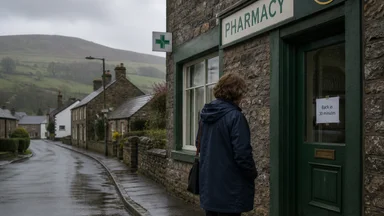
For a glaucoma patient in Nairobi, the monthly bill for prescription eye drops can easily match the rent on a modest apartment. A bottle of latanoprost, the most common first-line treatment, sells at private pharmacies for the equivalent of US$12 to $20 (about 1,500 to 2,500 Kenyan shillings). In public hospitals, the same drops are stocked and often free or heavily subsidized, but supply runs short and patients still pay out of pocket when they must buy from private shops. The result is a quiet rationing crisis: patients stretch doses, skip days, and lose vision that might have been preserved with a one-time laser procedure that is already available, but idle, in the same public wards.
The Price of Sight in Nairobi
Glaucoma is a leading cause of irreversible blindness worldwide, and Kenya is no exception. The disease damages the optic nerve, usually because of elevated pressure inside the eye. Without treatment, the damage is permanent. The standard medical therapy is a class of drops called prostaglandin analogues, which lower intraocular pressure. Latanoprost, the most widely used, is effective but not cheap.
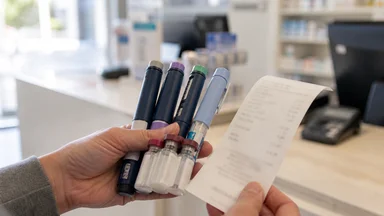
In Nairobi's private pharmacies, a single 2.5-milliliter bottle of latanoprost can cost anywhere from 1,500 to 2,500 Kenyan shillings, roughly US$12 to $20. For a patient using one drop in each eye daily, a bottle lasts about a month. That means a monthly cost of perhaps $15, which does not sound enormous in global terms, but it is more than many minimum-wage workers earn in a week. For a family living on less than $2 a day, the choice between medication and food is real.
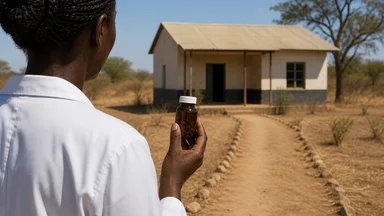
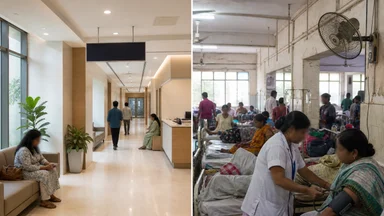
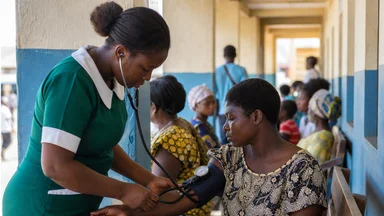
Public hospitals in Kenya do stock latanoprost and other glaucoma drops, often at a fraction of the private price. In theory, a patient can get a prescription filled at a county hospital pharmacy for as little as 100 shillings, less than a dollar. But stockouts are common. When the public supply runs out, patients have no choice but to buy at private prices or go without.
Insurance coverage for chronic eye care is rare in Kenya. The National Hospital Insurance Fund, now the Social Health Authority, covers some surgeries and hospital stays, but outpatient prescriptions for chronic conditions like glaucoma are often excluded or require prior authorization that few patients navigate. Private insurers offer some coverage, but the premiums are out of reach for most. So the financial burden falls squarely on the patient.
Laser Machines Gather Dust
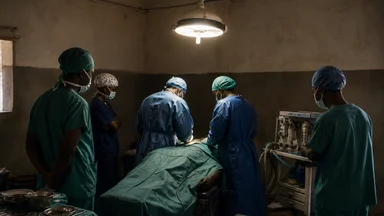
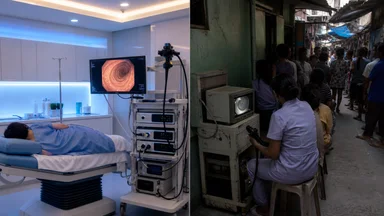
In the same public hospitals where patients queue for drops, there are laser machines capable of performing selective laser trabeculoplasty, or SLT. This procedure uses a low-energy laser to treat the drainage system of the eye, improving fluid outflow and reducing pressure. It is quick, typically takes less than 15 minutes, and is performed in an outpatient setting with topical anesthesia. It is not experimental; it has been used for decades.
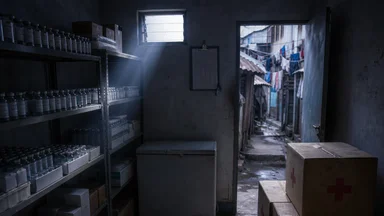
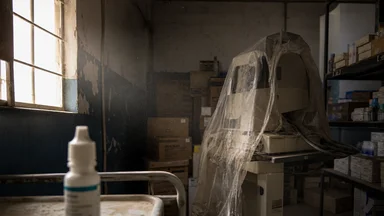
Yet these machines often sit idle. A 2023 survey of eye units in Kenya's public sector, conducted by the Ministry of Health with support from the Kenya Ophthalmological Society, found that more than half of the laser units were non-functional. The reasons were not mysterious: missing consumables, broken parts, and no budget for maintenance contracts. One machine in a Nairobi teaching hospital had not been used in over a year because a single circuit board needed replacement, a part that cost less than the price of a month's supply of drops for a hundred patients.
The surgeons are there. Kenya has a growing cadre of ophthalmologists trained in SLT, many of whom performed the procedure during their residency abroad. But they cannot operate a machine that is dark. They fall back on prescribing drops, which they know many patients cannot afford to take consistently.
The idle machines are not just a symbol of waste; they are a direct cause of preventable blindness. Each year a machine sits unused, hundreds of patients are started on a lifetime of drops, many of whom will eventually stop due to cost or forgetfulness. The tragedy is that a single SLT session can reduce eye pressure for months or even years, delaying or eliminating the need for daily medication.
The Cost Divide Explained by Formulary
Why does a country with working laser machines and trained surgeons default to drops? The answer lies in the formulary, the list of medicines and procedures that public health systems agree to stock and reimburse. Kenya's national formulary, like many in low- and middle-income countries, is built around cheap generic medicines. Drops are inexpensive to manufacture, and the procurement system is well-established. Laser machines, by contrast, are considered capital-intensive equipment, requiring an upfront purchase, regular maintenance, and a supply chain for consumables.
The recurrent cost of drops fits neatly into the annual health budget. A government can buy a year's supply of latanoprost for a few thousand patients for a modest sum. A laser machine costs tens of thousands of dollars, and the maintenance contract adds more. In a ministry of health with competing priorities, the laser is a hard sell.
Donor funding, which supports much of Kenya's eye care programs, is also skewed toward medicines. Global health initiatives that target neglected tropical diseases and trachoma have historically donated antibiotics and other drugs, not surgical equipment. When donors do fund equipment, it is often for cataract surgery, which has a more established cost-effectiveness argument. Glaucoma laser, though evidence-based, has not attracted the same donor interest.
There is no line item in the national health budget for laser maintenance. When a machine breaks, the repair cost has to come from a discretionary fund or a donor, and that rarely happens. So the machine sits, and the drops continue.
When Surgery Is Cheaper Than Drops
Economists who study health systems have long argued that laser trabeculoplasty is cost-effective, and in some settings, it is actually cheaper than a lifetime of drops. A 2019 analysis in the journal Ophthalmology, using data from multiple countries, estimated that SLT as a first-line treatment saved health systems money over a five-year horizon compared to starting with medication. The savings came from reduced pharmacy costs and fewer follow-up visits.
The math is simple. Drops cost a few dollars a month, but they are a monthly cost that goes on for decades. SLT costs more upfront, perhaps $200 to $500 in a public facility in Kenya, but it is a one-time expense that can delay the need for drops for years. Over the course of a patient's life, the laser is often cheaper, and it spares the patient the burden of remembering to take medication every day.
Yet clinical guidelines still push drops first. The American Academy of Ophthalmology and the European Glaucoma Society both list prostaglandin analogues as the initial therapy for most patients, with laser as an alternative or add-on. The guidelines are based on randomized trials showing that drops are effective at lowering pressure, but they rarely account for the real-world problem of adherence. A patient who cannot afford drops is not getting effective treatment, no matter what the trial data says.
Insurance companies, where they exist, also prefer predictable bills. A monthly prescription is a known cost; a laser procedure is a lump sum that might be denied as "elective" or "unproven" even when evidence supports it. This is not a uniquely Kenyan problem. In the United States, some insurers have started covering laser as a first-line treatment, but many still require patients to try and fail on drops first.
A Kenyan Ophthalmologist's View
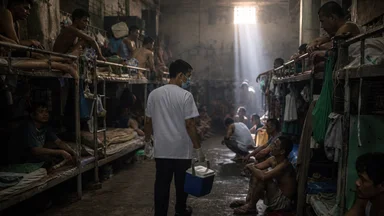
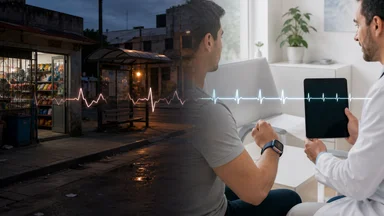
Dr. Mercy Wanjiku, a Nairobi-based ophthalmologist who has practiced for over 15 years, sees the consequences of the cost divide every day. She works at a private clinic in the city and also volunteers at a public hospital one day a week. In her private practice, patients can afford drops and often come in for regular check-ups. In the public hospital, she sees patients who have been rationing their drops, using them every other day or stopping entirely when the money runs out.
"I have patients who come in with advanced glaucoma who have never had a pressure check in years," she says. "They tell me they stopped the drops because they couldn't afford them. Some have already lost vision in one eye." She believes that laser trabeculoplasty could change this. "If we could give them a laser treatment early, they wouldn't need the drops for a while. It would buy them time and save their sight."
But when she refers a patient for laser at the public hospital, the answer is often that the machine is down. "I have been on the phone with the biomedical department, trying to get a part replaced. It took six months just to get a quote. By then, the patient had already gone blind in one eye."
Dr. Wanjiku acknowledges that not every patient is a candidate for laser. The procedure works best for certain types of open-angle glaucoma, and it may not be effective for everyone. But for the many who are eligible, she argues, it is a missed opportunity. "We have the technology, we have the skills, but we don't have the system to use them."
Not a Silver Bullet: The Limits of Laser
For all its promise, laser trabeculoplasty is not a universal solution. It requires a trained ophthalmologist, which Kenya has, but not in every county. Many rural hospitals lack a single eye surgeon, let alone one skilled in SLT. The procedure also requires a functioning laser machine, and as we have seen, that is far from guaranteed. Even when the machine works, patient selection is critical. SLT is most effective for open-angle glaucoma; it is less effective for angle-closure glaucoma or secondary glaucomas. Some patients will not respond to laser at all, and their pressure may remain high despite the procedure.
The upfront cost of laser is another barrier. While it may be cost-effective over a lifetime, the initial outlay of $200 to $500 is beyond the reach of many patients who cannot afford drops. Public hospitals might offer the procedure at a subsidized rate, but that requires a budget line that does not currently exist. And if the laser fails, the patient still needs drops, so the cost is additive, not substitutive.
There is also a training gap. While Kenya has a growing number of ophthalmologists, many are concentrated in Nairobi and a few other cities. Rural patients may have to travel long distances to access a facility with a working laser, which adds transportation costs and time. Some ophthalmologists are not comfortable performing SLT because they have not done it since residency, and there is no structured refresher program. The Kenya Ophthalmological Society has proposed a training initiative, but it has not yet been funded.
Finally, laser is not a cure. It lowers pressure, but it does not stop the disease process. Patients still need regular check-ups to monitor their pressure and optic nerve. If the pressure rises again, they may need additional laser sessions or a return to drops. In that sense, laser is not a one-time fix that eliminates the need for ongoing care; it is a way to reduce the burden of daily medication, not eliminate it entirely.
These limitations do not negate the value of laser. They simply mean that any strategy to expand its use must be realistic. It is not enough to buy machines; you must also train people, ensure maintenance, and create referral pathways. And for patients who are not candidates, or who cannot afford the procedure, drops will remain the only option, which is why improving access to affordable medication is still essential.
What Would Change the Equation
Fixing this problem is not a matter of inventing new treatments. It is a matter of rethinking how eye care is financed and delivered. One approach is to bundle laser trabeculoplasty as a first-line treatment in clinical guidelines, not just for patients who fail drops. This would require a shift in how ophthalmologists are trained and how public hospitals budget for equipment.
Another is to train more laser technicians and biomedical engineers who can maintain the machines in-country. Currently, many repairs require sending parts abroad, which takes months and costs more than the part itself. Building local capacity would reduce downtime and make maintenance contracts more affordable.
Procurement reforms could also help. In Kenya, public hospitals must follow a central procurement process that is slow and often favors the lowest bidder, even when that bidder cannot provide spare parts. Allowing hospitals to purchase consumables directly, or setting up a pooled maintenance fund, could keep machines running.
Public-private partnerships are another option. Some private eye clinics in Nairobi have functional lasers and could offer training or maintenance support to public facilities. A shared service model, where a mobile laser unit visits different hospitals on a rotating schedule, has been tried in rural India and could be adapted to Kenya.
Finally, insurance coverage for laser procedures would remove the financial barrier for patients. If the Social Health Authority recognized SLT as a covered procedure, more patients could access it. This would require an actuarial analysis of the cost savings, but the evidence from other countries suggests it would be a good investment.
A Simple Fix Slipping Away
The evidence supporting laser trabeculoplasty is strong. Multiple randomized trials, including the LiGHT trial in the UK, have shown that it is at least as effective as drops for initial treatment, and it is more cost-effective over the long term. The World Glaucoma Association has endorsed it as a viable first-line option. Yet in Kenya, and in many low- and middle-income countries, it remains underused.
The missing ingredient is not knowledge or technology. It is political will at the ministry level. Health budgets are tight, and officials are reluctant to allocate funds for equipment that might break and sit idle. But the cost of inaction is measured in blindness. Each year that passes, more patients lose vision that could have been saved.
There are signs of progress. The Kenya Ophthalmological Society has been advocating for a national glaucoma screening program and for the inclusion of laser in the essential package of care. Some county governments have started to budget for laser maintenance after advocacy from local ophthalmologists. But these are isolated efforts, not a coordinated national strategy.
The tragedy is that the fix is simple. A one-time procedure, a modest investment in maintenance, and a change in prescribing habits could shift the trajectory for thousands of patients. Yet the system is not set up to reward prevention or long-term savings. It is set up to buy cheap medicines and hope for the best. Until that changes, the lasers will keep gathering dust, and the drops will keep costing a month's rent. The question is whether Kenya's health leaders will see the long-term value of a short-term investment, or let another generation of patients go blind waiting for an answer.
This article is for informational purposes only and does not constitute medical advice. Always consult a qualified health professional for diagnosis and treatment options.