Tuberculosis Resurges in Manila Jails as Rapid Tests Queue Behind Smear Microscopy
Inside Quezon City Jail, the largest detention facility in the Philippines, the air in the cramped dormitories is thick with the breath of hundreds of men. Each cell block, designed for a fraction of its current occupants, becomes a perfect vessel for tuberculosis. The disease, once in retreat, has resurged here. In 2024, the jail reported tuberculosis incidence rates several times higher than the national average, and the numbers keep climbing. Yet the diagnostic tools that could catch cases early and curb transmission remain stubbornly underused. Smear microscopy, a century-old technique, still stands as the first line of detection, while rapid molecular tests queue behind it, starved of cartridges and funding.
Quezon City Jail: A TB Hotspot Hidden in Plain Sight
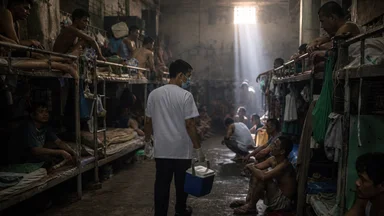
Quezon City Jail, officially known as the Quezon City Jail Male Dormitory, holds around 5,000 detainees in a facility built for fewer than 1,000. Overcrowding at this scale creates ideal conditions for airborne pathogens. Tuberculosis spreads when an infectious person coughs or sneezes, releasing tiny droplets that remain suspended in the air. In a cell where men sleep shoulder to shoulder, with poor ventilation and limited sunlight, one undiagnosed case can infect dozens within weeks.
Health workers at the jail's clinic estimate that roughly 10 to 15 percent of detainees have active tuberculosis at any given time, a rate that dwarfs the national prevalence of around 0.6 percent. This estimate aligns with a 2022 study by the Philippine Department of Health and the University of the Philippines Manila, which found active TB prevalence of 12.4 percent among detainees in Metro Manila jails. Many arrive already sick, having contracted the infection in police holding cells or on the streets. Others fall ill after weeks of confinement, their immune systems weakened by malnutrition and stress. The jail's medical team, composed of a few nurses and a part-time physician, struggles to keep pace with the caseload.
The symptoms are easy to miss. A persistent cough, night sweats, weight loss, and fatigue are common complaints in a population already burdened by poverty and poor health. Without routine screening, many cases go undetected for months. When detainees do seek care, the first test they receive is usually smear microscopy, a method that looks for bacteria in sputum under a microscope. The test is cheap, but it is also insensitive, detecting only about half of all active cases and missing nearly all cases in people with weakened immune systems.
The consequences of this diagnostic gap are severe. Delayed diagnosis means delayed treatment, and every week of delay allows the bacteria to spread. In the closed environment of a jail, the infection radiates outward, infecting cellmates, guards, and visitors. By the time a case is confirmed, the patient may have already transmitted the disease to dozens of others, seeding new infections that will surface months or years later as active disease.
Why Smear Microscopy Fails in Jail Settings
Smear microscopy has been the backbone of tuberculosis diagnosis for over a century. It is simple, inexpensive, and does not require complex equipment. But its limitations are profound. The test relies on a skilled technician to spot acid-fast bacilli in a stained sputum sample. In a busy jail clinic, where technicians may handle dozens of samples a day, the risk of false negatives is high. A systematic review by the Cochrane Infectious Diseases Group, published in 2014, found that smear microscopy misses between 30 and 70 percent of culture-confirmed cases, depending on the laboratory's quality. Similar findings have been reported in studies from South Africa, India, and Kenya, where smear microscopy sensitivity ranged from 40 to 60 percent compared to culture.
More critically, smear microscopy cannot distinguish between drug-susceptible and drug-resistant strains. A patient with multidrug-resistant tuberculosis (MDR-TB) will show the same smear-positive result as someone with a fully treatable infection. The only way to detect resistance is through culture and drug susceptibility testing, which can take weeks or months. In a jail, where detainees are often transferred or released before treatment is complete, that delay can be fatal.
The World Health Organization has long recommended that molecular tests like GeneXpert MTB/RIF replace smear microscopy as the initial diagnostic tool in high-burden settings. GeneXpert can detect tuberculosis DNA and simultaneously identify mutations associated with rifampicin resistance, the key marker for MDR-TB. The test returns results in under two hours and requires minimal training. Yet in Manila's jails, GeneXpert remains a scarce resource, reserved for cases that have already failed first-line treatment or for those with known risk factors.
The reasons for this are partly financial and partly logistical. Each GeneXpert cartridge costs several times more than a smear test, and the machines require a stable electricity supply and regular maintenance. In a resource-constrained health system, these costs add up. But the price of inaction is higher. Every missed diagnosis, every delayed result, prolongs transmission and drives the emergence of drug-resistant strains. The smear test, once a pragmatic choice, has become a bottleneck that the system cannot afford to ignore.
The GeneXpert Bottleneck: Machines Without Cartridges
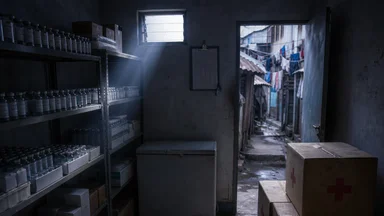
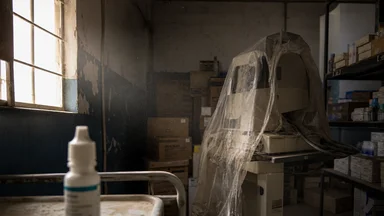
Quezon City Jail received a GeneXpert machine in 2018, a donation from an international NGO. The machine sits in the clinic's small laboratory, capable of processing up to sixteen samples at a time. But it is rarely used. The cartridge supply is erratic, and the jail's budget cannot absorb the recurring cost. In 2024, the clinic ran out of cartridges for four consecutive months, forcing clinicians to fall back on smear microscopy alone.
The shortage is not unique to the jail. Across the Philippines, the national tuberculosis program faces chronic supply chain failures. Cartridges are procured through a central agency, but distribution to peripheral facilities is slow and unpredictable. Health workers report that cartridges sometimes arrive with only a few weeks of shelf life remaining, and that stockouts are common in the second half of the fiscal year when funds run dry.
Donor funding, which once covered the bulk of cartridge costs, has become less reliable. The Global Fund to Fight AIDS, Tuberculosis and Malaria has reduced its support to the Philippines as the country's income level has risen, and the gap has not been fully filled by domestic resources. Meanwhile, private clinics in Manila, which cater to wealthier patients, have no trouble securing cartridges. They simply order directly from the manufacturer and pay the full price, which is around $10 to $15 per test.
In the jail, the impact of this bottleneck is stark. Detainees with symptoms of tuberculosis often wait weeks for a GeneXpert result, and some are released before the test is even processed. When they leave, they carry the infection into their communities. The machine, once a symbol of modern diagnostics, has become a monument to a supply chain that cannot keep pace with demand.
Drug-Resistant TB: A Silent Epidemic Behind Bars
When tuberculosis is left untreated or treated inadequately, the bacteria can develop resistance to the most powerful drugs. Multidrug-resistant TB requires a longer and more toxic treatment regimen, often lasting 18 months or more, with injectable agents that cause hearing loss and kidney damage. In the confines of a jail, where adherence is hard to monitor and side effects are hard to manage, the cure rate for MDR-TB is dismally low, some estimates put it below 50 percent.
The new drugs bedaquiline and linezolid have transformed MDR-TB treatment, shortening the regimen to six months and improving outcomes. But these drugs are expensive and often unavailable in jail settings. The Philippines has registered them for use, but procurement is slow, and the national program prioritizes civilian hospitals over correctional facilities. As a result, detainees with MDR-TB are often treated with older, less effective drugs, or they are transferred to a central prison hospital with long waiting lists.
The silent spread of MDR-TB in jails is a public health emergency that extends far beyond the prison walls. When detainees are released, they carry resistant strains into their families and neighborhoods. A 2023 study published in the Philippine Journal of Internal Medicine found that 22 percent of MDR-TB patients treated at the Lung Center of the Philippines had a history of incarceration, suggesting a strong link between jails and community transmission. The jail, far from being an isolated silo, is a reservoir of disease that continually seeds the wider population.
Overcrowding as a Biological Accelerant
Overcrowding is not just a social problem; it is a biological accelerant. In a cell with fifty men and a single window, the air is recirculated continuously, and infectious droplets stay suspended for hours. Sunlight, which has a natural germicidal effect, rarely reaches the interior. The lack of ventilation means that a single cough can expose the entire room to tuberculosis.
Malnutrition compounds the risk. Detainees receive a basic diet that typically consists of rice, dried fish, and vegetables, providing about 1,800 calories per day, which is below the recommended 2,500 for adult men. A 2019 nutritional assessment by the Bureau of Jail Management and Penology found that 40 percent of detainees were underweight, with deficiencies in protein, iron, and vitamin A. The immune system, already taxed by stress and poor living conditions, becomes less able to contain a latent infection. Latent TB, which lies dormant in about a quarter of the world's population, can reactivate when the body's defenses are weakened. In a jail, where the average stay is several months, the probability of reactivation is high.
HIV co-infection multiplies the danger. People living with HIV are 20 to 30 times more likely to develop active TB than those without the virus. The jail has a small HIV program, but testing rates are low. According to a 2024 internal report from the jail's health service, only 15 percent of incoming detainees received an HIV test, and the positivity rate was 2.8 percent, more than double the national average. When HIV and TB coexist, the diagnostic challenges of smear microscopy are even more pronounced, as the bacilli may be scarce in the sputum.
Reforms That Could Break the Cycle
Breaking the cycle of tuberculosis in Manila's jails requires a multi-pronged approach. The first step is to scale up GeneXpert testing, not just by installing machines but by ensuring a continuous supply of cartridges. The national program could negotiate lower prices through pooled procurement, and the jail could set up a buffer stock to prevent stockouts.
The second step is to decentralize testing to the jail clinic itself. Currently, samples are sent to a central laboratory, adding days to the turnaround time. With a GeneXpert machine on site and trained staff, results could be available the same day, allowing treatment to start immediately and reducing the window of transmission.
The third step is to adopt shorter preventive therapy for contacts. The WHO recommends a once-daily pill of isoniazid and rifapentine for three months, which is as effective as the old six-month regimen. If offered to all detainees who are close contacts of confirmed cases, this could prevent many infections from progressing to active disease. The jail could also integrate TB and HIV services, testing all TB patients for HIV and vice versa.
The fourth step is to address the root cause: overcrowding. This requires a broader criminal justice reform, including the decriminalization of minor drug offenses and the expansion of bail options. As long as the jail remains packed beyond capacity, no medical intervention can fully contain the disease. Ventilation improvements, such as the installation of open windows and exhaust fans, could reduce transmission, but they are only a stopgap.
What Manila's Jails Teach Global Health Systems
The situation in Manila's jails is a mirror of a larger global failure. Across low- and middle-income countries, tuberculosis remains a leading cause of death, despite the availability of effective tools. The problem is not a lack of knowledge but a lack of will and resources. Diagnostics must match the local reality, not just the ideal protocol. A GeneXpert machine without cartridges is as useless as no machine at all.
Supply chains are as vital as machines. The most sophisticated laboratory is worthless if the reagents and consumables cannot reach it in time. Donor funding, while essential, must be predictable and aligned with national priorities. The Philippines, like many countries, needs to invest its own resources in tuberculosis control, rather than relying on the generosity of others.
Prisons are not isolated health silos. They are part of the community, and the health of detainees is the health of the public. Ignoring tuberculosis in jails guarantees that it will spread beyond the walls, causing more cases, more deaths, and more costs downstream. Justice reform is public health policy, and decongestion is an intervention with measurable health benefits.
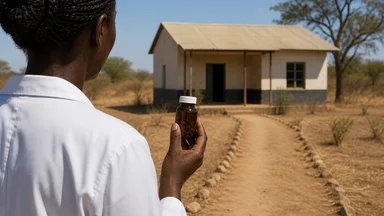
The lessons from Manila extend to other diseases and other settings. The recent experience with epilepsy drug supply chains in Zambia shows that the same pattern of stockouts and centralization plagues many neglected conditions. Similarly, the gastric cancer screening gaps in Japan illustrate how even wealthy countries struggle to align diagnostic capacity with need. The common thread is that health systems must be designed around the people they serve, not the other way around.
Early investment in tuberculosis control saves money. Treating a single case of drug-susceptible TB costs a few hundred dollars, while treating MDR-TB costs tens of thousands. The difference is enormous, and the cost of inaction is borne not only by the individual patient but by society as a whole. The Philippines has made progress in recent years, but the pace is too slow, and the jails remain a glaring gap.
The story of tuberculosis in Manila's jails is not a story of inevitable tragedy. It is a story of choices, of priorities, of a system that has failed to adapt to the realities of disease. The tools exist. The knowledge exists. What is lacking is the political will to deploy them effectively. Until that changes, the disease will continue to thrive in the shadows, waiting for the next opportunity to emerge.