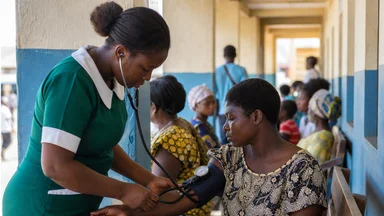
Typhoid Vaccines Sit in Dhaka Cold Storage While Slum Children Miss the Booster Window
In the low-lying wards of Dhaka, where monsoon floods lap at the edges of tin-roofed settlements, a quiet failure is unfolding. Typhoid vaccine vials, stored at the correct 2–8°C, remain stacked in cold rooms while the children who need a booster dose miss the window. The first dose was given, often with great fanfare. The second dose, the one that sustains protection through school years, never arrives.
A Cold Chain That Ends in a Locked Door
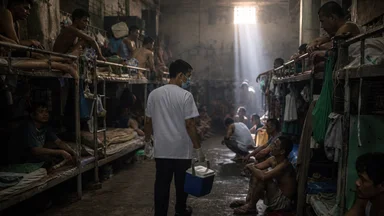
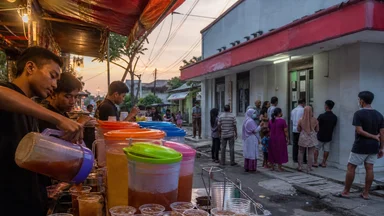
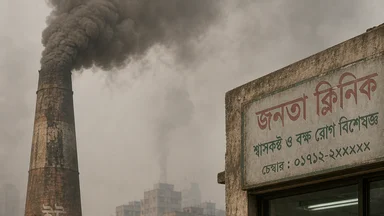
Dhaka's urban slums are among the densest settlements on earth. In Mirpur, Kamrangirchar, and Korail, families share rooms, water points, and latrines. When the rains come, drainage clogs and floodwater carries waste into the same channels children play in. Typhoid, a bacterial infection spread through contaminated food and water, finds these conditions ideal.
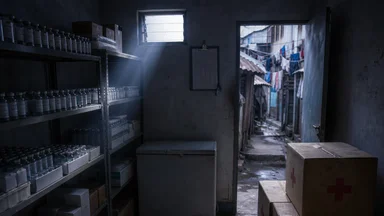
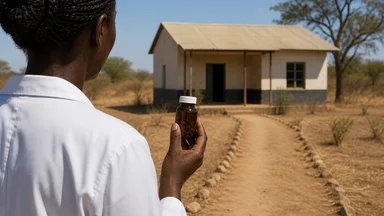
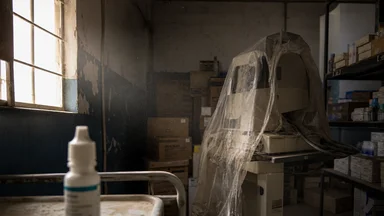
The vaccine itself is not the problem. Bangladesh's Expanded Programme on Immunization (EPI) has received supplies of typhoid conjugate vaccine (TCV), funded largely through Gavi, the Vaccine Alliance. The vials sit in national cold stores, moved occasionally to regional depots, then to a health centre in a slum. There they wait.
Outreach sessions, the mechanism by which slum children usually get vaccinated, have been cancelled repeatedly. Sometimes the reason is a flood, sometimes a transport strike, sometimes a shortage of health workers. The sessions are not rescheduled. The vials stay cold, the children stay susceptible.
The booster window, typically 12 to 24 months after the primary dose, closes quietly. A child who received the first shot at age two may be three or four by the time a second session is attempted. The immune memory fades, and the protection that should have carried the child through primary school is gone.
Why the Booster Window Matters More Than the First Shot
A single dose of TCV provides meaningful protection, but that protection wanes. Studies from South Asia, where typhoid is endemic, show that efficacy drops noticeably after the first two years. Without a booster, a child who was protected at age three may be vulnerable again by age five, just as they start school and encounter a wider circle of potential exposures.
The booster is not a luxury. It is the dose that extends protection through the years when typhoid incidence peaks. In Dhaka, the disease burden is highest among children under five and again in school-age children. The first dose catches the toddler; the booster is meant to carry the child through the classroom years.
Typhoid fever in Dhaka is not the mild disease some imagine. It presents with prolonged fever, abdominal pain, and sometimes intestinal perforation. Without timely antibiotics, it can be fatal. With the rise of drug-resistant strains, treatment becomes more complicated and more expensive, and the vaccine becomes a prevention tool that also protects against resistant disease.
Resistance to ceftriaxone, a common treatment, has been reported in hospitals across the city. Each resistant case requires longer hospital stays, second-line drugs, and greater out-of-pocket costs for families already living on tight margins. A booster dose, costing a fraction of a single day's hospital care, is a bargain that policy is failing to make.
The Payer Rules That Keep Vials in the Cold
The national programme funds only one dose per child. The initial push for TCV, supported by Gavi, was designed as a catch-up campaign: a single dose for children under 15 in high-burden areas. That campaign achieved high coverage in its first round, but the financing model did not include a routine second dose.
Donor support for TCV has been tied to campaign targets, not to sustained two-dose schedules. When the campaign ended, the budget line for typhoid vaccine shrank. Health workers in Dhaka's slums report that they have the vials but not the transport budget to reach the settlements on a regular schedule.
Cold storage capacity is not the bottleneck. The chain is intact, the temperature logs are maintained, and the vials are viable. The bottleneck is the absence of a line item in the EPI budget for a second dose, and the absence of a policy that treats the booster as part of routine immunisation rather than as an optional extra.
The result is a paradox: a vaccine that is proven, prequalified by the World Health Organization, and sitting in a refrigerator, while the children it was bought for go unprotected. The cold chain does not break; it just waits.
What the Data From Mirpur and Kamrangirchar Shows
Data from the slums of Mirpur and Kamrangirchar paint a stark picture. Coverage after the primary campaign was high, near 80% in some wards. Follow-up surveys, conducted roughly a year later, show that booster coverage has fallen to under half. The drop is not uniform; it clusters in the poorest wards, where families move frequently and health workers have the least reach.
Typhoid case reports from the same areas show a corresponding rise. Hospitals in Dhaka have noted an increase in typhoid among children under five and among school-age children, the groups that the booster was meant to protect. Some clinicians suspect that the rise is partly due to missed boosters, though they are careful to note that multiple factors, including flooding and sanitation, play a role.
More worrying is the pattern of antimicrobial resistance. Blood culture data from city hospitals show a growing proportion of typhoid isolates resistant to ceftriaxone, the first-line injectable antibiotic. For a family in Kamrangirchar, a resistant infection can mean weeks of treatment, repeated hospital visits, and costs that push a household into debt.
The slum residents themselves face the double burden of exposure and cost. A single case of typhoid, even a mild one, can wipe out a month's income. The vaccine, if it were given, would be nearly invisible in cost-effectiveness terms. Instead, the vials sit in cold storage, and the families pay the price in sickness and lost wages.
The Global Evidence for a Two-Dose Strategy
The evidence for a two-dose strategy is not speculative. Multiple studies, including those conducted in India and Nepal, have shown that a booster dose extends protection to at least five years, and likely longer. The World Health Organization has prequalified several TCV products, and its position on boosters is clear: where typhoid is endemic, a second dose should be considered as part of the routine schedule.
India and Nepal have moved ahead. Both countries have adopted routine boosters for typhoid, integrating the second dose into their childhood immunisation calendars. The cost per dose has fallen as pooled procurement has expanded, making the booster more affordable than it was even a few years ago.
Bangladesh has not yet followed. The national technical advisory group on immunisation has discussed the two-dose schedule, but the decision has been deferred, pending further cost-effectiveness analysis. In the meantime, the vaccine sits in the cold room, and the evidence accumulates elsewhere.
Critics of a two-dose strategy point to the operational challenge. Adding a booster to the routine schedule means training health workers, updating registers, and ensuring that children return for a second visit. These are real hurdles, but they are not insurmountable. The same challenges have been met for other vaccines, such as measles, which requires two doses in most national programmes.
How to Close the Gap Without New Funding
The gap between the first and second dose can be closed without a large new budget line. The most direct step is to integrate the booster into routine immunisation visits. When a child comes for measles or DTP boosters, the health worker can also give the typhoid booster, using the same visit and the same cold chain.
Community health workers, already active in Dhaka's slums, can be trained to track defaulters. They know which children missed the booster, and they can remind families when a session is scheduled. Their work is not new; it is the same defaulter tracing that has been used for polio and measles.
Cold-chain stock can be shifted to high-burden clinics. Instead of storing all vials at central depots, a portion can be kept at the health centres that serve the slums, reducing the transport barrier that has cancelled so many outreach sessions. The capacity already exists; the distribution does not.
Booster records can be linked to school enrollment lists. In Dhaka, children must show an immunisation card when they start school. A simple check for the typhoid booster, and a referral to the nearest clinic if it is missing, would catch many children who slipped through the net. This is not a new system; it is a small addition to an existing one.
The Human Cost of Missed Boosters
Behind the statistics are individual stories that illustrate the toll. Take the case of a mother in Korail who brought her two-year-old for the first dose during a campaign. She was told to return in a year for the booster, but the health centre was closed on the scheduled day, and she could not afford to take time off work to come back. By the time the next outreach session was held, her child was four and had already had a bout of typhoid, treated with a course of antibiotics that cost nearly a week's wages.
Or consider a family in Mirpur that moved to a different slum during the year between doses. Their new health centre had no record of the first dose, and the mother, unfamiliar with the system, did not know how to get the booster. The child remained unboosted, and a year later was hospitalised with a severe case of typhoid, requiring a long stay and leaving the family with significant debt.
These are not isolated incidents. Health workers in the slums describe a pattern of missed appointments, lost records, and families who simply do not know that a second dose is needed. The information gap is as much a barrier as the funding gap.
The economic argument for the booster is compelling. The cost of a single typhoid hospitalisation in Dhaka can be several times the cost of a booster dose. For a family living on a few dollars a day, the choice between a preventive shot and a hospital bill is no choice at all. Yet the system, by failing to deliver the booster, forces that choice on the poorest families.
The Role of Community Engagement
Community engagement is often the missing piece in immunisation programmes. In Dhaka's slums, trust in health services is fragile, built over years of interactions that have sometimes been rushed or impersonal. A booster programme that does not involve community leaders and local influencers may struggle to reach the most vulnerable families.
Religious leaders, women's groups, and local shopkeepers can all play a role in spreading the message that a second dose is necessary. In some areas, successful polio campaigns have used such networks to overcome hesitancy and logistical barriers. The same approach could be applied to typhoid boosters, turning a missed opportunity into a routine part of community health.
Mobile phone reminders are another low-cost tool. Many families in Dhaka's slums have access to a mobile phone, even if it is shared. A simple text message reminding parents of the booster date, and the clinic location, could improve attendance. Pilot programmes in other countries have shown that such reminders can increase vaccination coverage by a meaningful margin.
These interventions are not expensive, but they require coordination and a commitment to reaching every child. They also require the health system to be ready to deliver the vaccine when families do come. The cold chain is ready; the question is whether the rest of the system is.
The Next Outbreak Is Already in the Queue
Typhoid does not wait for budget cycles. In Dhaka, the conditions for transmission are constant, and each missed booster is a potential carrier. The floods that come each year spread contamination faster, and the crowded slums amplify every case.
Antimicrobial resistance makes each case costlier, in both human and financial terms. A child with resistant typhoid may need weeks of intravenous antibiotics, and the cost of that treatment falls on the family. The vaccine, if it were given, would prevent the infection in the first place, and with it the resistance.
A small investment now, to deliver the boosters that are already in the cold chain, would prevent larger costs later. The vials are not the constraint; the policy is. Until the programme treats the second dose as a routine part of immunisation, the cold storage will keep holding a promise that is not being kept.
The next outbreak is not a hypothetical. It is already forming in the crowded wards where children have had one dose and no more. The vaccine is there. The children are there. The missing link is a schedule that says the second dose matters as much as the first.
This article is for informational purposes only and does not constitute personalised medical advice. Readers should consult a qualified health professional for guidance on vaccination and treatment decisions.