Malawi’s District Hospitals Lose Half Their Anesthetists While Cesarean Sections Wait Hours
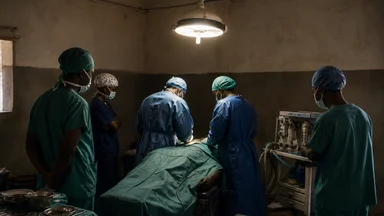
In a district hospital in central Malawi, a woman in labor was wheeled into the operating room for an emergency cesarean section. The surgeon was ready, the instruments were sterilized, and the lights were on. But the anesthetist—the only one on duty for the entire facility—was unreachable. For two hours, the surgical team waited, paging and calling, while the patient's condition grew more precarious. When the anesthetist finally arrived, the surgery proceeded, but the delay had already taken a toll on the mother and the baby.
This scenario is not isolated. Across Malawi's district hospitals, a deepening shortage of anesthesia providers is turning routine emergency surgeries into hours-long ordeals. The problem is not a lack of trained professionals—it's that half of them have left the public sector in the past five years, driven by low pay, crushing workloads, and a sense of professional isolation.
A Single Operating Room, Two Hours of Waiting
The district hospital in question, which I'll call Chikwawa District Hospital to protect patient confidentiality, serves a catchment area of roughly 500,000 people. It has one operating room, two surgeons, and a single anesthetist on call at any given time. On the night in question, the anesthetist was attending to another emergency across the compound, and the communication system—a basic walkie-talkie—failed.
According to a 2023 survey by the Malawi College of Medicine, the average delay for emergency cesarean sections in district hospitals is between 1.5 and 3 hours, with the most common reason being the unavailability of an anesthesia provider. This delay is critical: for every 30 minutes that pass after a decision to operate, the risk of maternal death increases by roughly 2%.
The woman survived, but her baby was born with low Apgar scores and required resuscitation. The anesthetist, a clinical officer with two years of anesthesia training, later told a colleague that he had been up for 36 hours straight, covering both the operating room and the maternity ward. He was exhausted, underpaid, and considering leaving for a private clinic in Blantyre.
This story is emblematic of a systemic crisis. Malawi has roughly 20 anesthetists for its entire population of 20 million, and most of them work in the capital, Lilongwe, or the commercial hub, Blantyre. District hospitals, which serve the rural majority, are left with a handful of clinical officers who are often the only anesthesia providers for hundreds of thousands of people.
Half the Workforce Gone in Five Years
The numbers are stark. Between 2018 and 2023, the number of anesthesia providers in Malawi's public sector dropped from roughly 120 to 60—a decline of 50%, according to a report by the Malawi Ministry of Health and the World Health Organization. The training pipeline, which produces about 10 new graduates per year from the Malawi College of Medicine's anesthesia program, cannot keep pace with the attrition.
Young graduates, many of whom are clinical officers who completed a two-year anesthesia diploma, are increasingly choosing not to take up posts in district hospitals. Instead, they migrate to private hospitals in urban areas, where salaries can be three to four times higher, or they leave the country entirely for neighboring Zambia, South Africa, or the United Kingdom, where their skills are in high demand.
Retention is the crux of the problem. A 2022 study in the Journal of Global Health found that 70% of anesthesia graduates from Malawi's training programs had left public service within five years of graduation. The reasons cited were consistent: inadequate pay, lack of career progression, and a sense of being professionally abandoned in remote postings.
The result is a vicious cycle. As more anesthetists leave, the workload on those remaining increases, leading to burnout and further attrition. District hospitals are forced to rely on nurses with minimal anesthesia training, or to transfer emergency cases to central hospitals, which are often hours away by road.
Why Anesthetists Leave Rural Posts
The decision to leave a rural post is rarely made lightly. For many, it comes down to economics. A clinical officer anesthetist in a district hospital earns roughly 300,000 Malawi kwacha per month—about US$150 at current exchange rates—which is below the living wage for a family of four. In contrast, a private clinic in Lilongwe might offer 1 million kwacha or more, plus housing and transport allowances.
But money isn't the only factor. Professional isolation is a major driver. In a district hospital, an anesthetist is often the only person with their skill set, and there is no one to consult when a difficult airway or a pediatric case arises. Supervision from the central level is sporadic, and continuing medical education is rare.
The workload is relentless. Anesthetists in district hospitals are typically on call 24 hours a day, seven days a week, with no rest periods after night shifts. They cover not only cesarean sections but also emergency laparotomies, trauma cases, and sometimes obstetric complications that require anesthesia for manual removal of the placenta.
Family needs also play a role. Many anesthetists are married with children, and they want their children to attend good schools and have access to healthcare. Rural districts often lack these amenities, so the spouse and children may live in a city, forcing the anesthetist to commute—if they can—or to leave altogether.
Consider the case of a young anesthetist we'll call Joseph. He trained at the Malawi College of Medicine and was posted to a district hospital in the north. Within a year, he was the only anesthesia provider for a catchment of 300,000 people. His wife and two children stayed in Lilongwe, where his children attended a private school. Joseph would drive the 400-kilometer round trip every other weekend, a journey that took seven hours on unpaved roads. After 18 months, he resigned and took a position at a private hospital in Blantyre. 'I loved the work,' he told a colleague, 'but I couldn't be a father from a distance.'
Another factor, less often discussed, is the lack of basic equipment and supplies. Anesthetists in district hospitals frequently face shortages of essential drugs like ketamine and propofol, as well as functioning pulse oximeters and oxygen concentrators. When the oxygen runs out mid-case, or the only suction machine breaks down, the anesthetist is left to improvise with no support. This daily struggle to provide safe care under impossible conditions erodes morale and pushes many to seek safer environments.
The Ripple Effect on Surgical Safety
The shortage of anesthetists has direct consequences for patient safety. When a cesarean is delayed by hours, the risk of maternal death from hemorrhage or sepsis rises sharply. A 2020 study in the Malawi Medical Journal found that delays in emergency surgery were responsible for 15% of maternal deaths in district hospitals, with anesthesia unavailability being the most common cause.
Even when an anesthetist is available, the pressure can lead to errors. A rushed induction, an incorrect dose of a muscle relaxant, or a failure to monitor the patient adequately can have catastrophic results. A 2021 review of anesthesia-related deaths in Malawi found that most were preventable and were often associated with fatigue and inadequate staffing.
In some cases, patients are transferred to central hospitals, which are 100 to 200 kilometers away. The journey can take several hours on poor roads, and the patient may not survive the trip. This not only increases the risk of death but also places an additional burden on the already overcrowded central hospitals.
The impact extends beyond emergency surgery. Elective procedures, such as hernia repairs and hysterectomies, are often postponed indefinitely, leaving patients in pain and reducing the hospital's ability to generate revenue. The backlog of untreated surgical conditions is a silent epidemic.
There is also a hidden cost to the healthcare system itself. When an anesthetist is absent, the entire operating theater may be shut down, wasting the time of surgeons, nurses, and support staff. This inefficiency further strains an already stretched system and demoralizes the entire team.
Training More Isn't the Only Answer
Increasing the number of trained anesthetists is necessary but not sufficient. As the data show, training alone does not solve the problem if graduates leave within a few years. What is needed is a package of incentives that make rural posts attractive and sustainable.
Financial incentives are the most obvious. A rural allowance of 50% of base salary, combined with subsidized housing and a guaranteed vehicle for transport, could make a significant difference. Some district hospitals have experimented with such schemes, and they report lower turnover, though the numbers are small.
Non-financial incentives matter too. Mentorship programs, where senior anesthetists make regular visits to district hospitals, can reduce professional isolation and build confidence. Telemedicine and remote supervision, using mobile phones or internet-based platforms, can provide real-time support for difficult cases.
Task-sharing is another avenue. Clinical officers who have completed a shorter training in anesthesia can handle many routine cases, freeing up anesthetists for more complex procedures. Malawi has already used task-sharing for cesarean sections, with non-physician clinicians performing the surgery. Extending this to anesthesia is a logical step.
Career progression is often overlooked. Creating a clear pathway from clinical officer to senior anesthetist, with opportunities for further training and promotion, could encourage graduates to stay in the public sector. A 2023 pilot in the central region showed that anesthetists who were promised a scholarship for advanced training were more likely to stay for at least three years.
But there are counter-arguments to consider. Some critics worry that task-sharing could dilute the quality of anesthesia care, especially for high-risk patients. They argue that the focus should be on producing more physician anesthetists, not on lowering the bar. However, given the current reality—where many patients receive no anesthesia at all—pragmatic solutions are needed. The Zambian experience suggests that with proper training and supervision, clinical officers can provide safe anesthesia for common procedures.
Another counter-argument is that financial incentives alone might attract the wrong candidates, those motivated primarily by money rather than a commitment to public service. Yet retention studies in other African countries show that a combination of financial and non-financial incentives is most effective. The key is to create a package that addresses the multiple drivers of attrition.
A Model That Worked in Zambia
Zambia faced a similar crisis in the early 2000s and responded by creating a dedicated cadre of anesthesia clinical officers. The program, run by the University of Zambia, trains clinical officers in a two-year, practical-focused curriculum that includes rotations in district hospitals. Graduates are deployed to rural posts with a clear job description and a career ladder.
The results have been encouraging. Zambia now has more than 300 anesthesia clinical officers, and the number of surgical procedures performed in district hospitals has increased by 40% since the program began. Retention rates are higher than in Malawi, partly because the program includes a bond that requires graduates to serve in a rural district for at least three years.
Malawi could adapt this model. The Malawi College of Medicine already runs a similar program, but with lower output and less structured deployment. Expanding the intake and linking it to a bond, as Zambia did, could help close the gap.
However, the Zambian model is not without challenges. The clinical officers are not as well trained as physician anesthetists, and they are not equipped to handle all complications. There is also a risk of creating a two-tier system, where rural patients receive a lower standard of care than those in cities. But given the current situation, where rural patients often receive no anesthesia at all, task-sharing is a pragmatic improvement.
Another example comes from Ethiopia, which has scaled up its anesthesia workforce by training nurse anesthetists. The program there has been credited with increasing access to cesarean sections in rural areas. Yet Ethiopia also faces retention challenges, and the quality of training varies. This underscores the need for Malawi to learn from multiple experiences and adapt them to its own context.
What a District Hospital Needs Now
In the short term, Malawi's district hospitals need an immediate boost in staffing for high-volume sites. The Ministry of Health, with support from donors, could deploy an additional 20 to 30 anesthetists to the busiest district hospitals within the next year, focusing on those with the highest cesarean section rates.
On-call compensation must be reformed. Currently, anesthetists are expected to be available around the clock without extra pay, which is a major disincentive. A system that provides a nominal fee for on-call hours and ensures a rest period after a night shift would be a low-cost improvement.
Better data on surgical wait times is essential. The Ministry of Health should require district hospitals to record the time from decision to incision for emergency surgeries, and to audit the causes of delays. This data would not only identify problem areas but also hold hospitals accountable.
A national anesthesia workforce plan, with clear targets for training, deployment, and retention, is overdue. This plan should be developed with input from anesthetists themselves, who are often the best source of ideas for what would keep them in their posts.
Donors, who have historically funded training programs, should tie their funding to retention outcomes. Instead of paying for a certain number of graduates, they could support a package of incentives that includes salary top-ups, housing, and mentorship. This would ensure that the investment in training is not wasted.
None of these measures is a silver bullet. The crisis is rooted in structural inequalities that will take years to address. But without a concerted effort, the situation will only worsen, and more women will wait hours for the surgery that could save their lives.
This article is for informational purposes only and is not intended as professional medical or policy advice. Always consult a qualified healthcare provider for individual medical decisions.