Colorectal Screening Colonoscopies Outpace Sigmoidoscopy Training Across Manila’s Wealth Gap
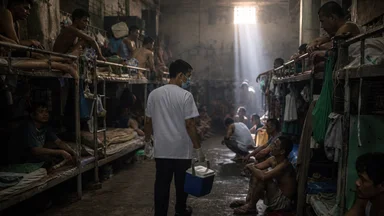
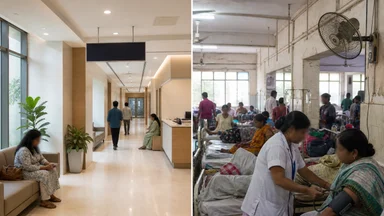
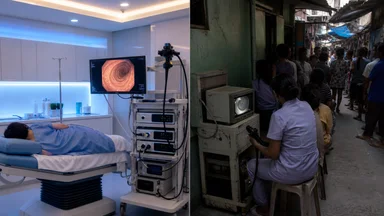
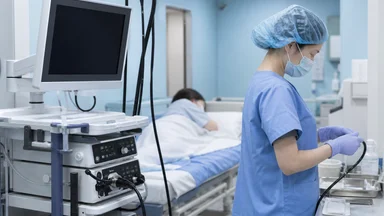
In the endoscopy suites of Manila's private hospitals, the schedule is packed with colonoscopies. Patients in Makati's glass towers expect the full view: a sedated afternoon, a camera threaded the length of the colon, and, if needed, a polyp removed on the spot. Across the city in Tondo, public clinics face a different reality. Their sigmoidoscopy lists are thin, training slots scarce, and the scopes themselves often older than the residents who wield them. The gap between these two worlds is not just about equipment. It is about which procedure gets taught, which gets reimbursed, and which gets marketed as the gold standard. And that gap shapes who gets screened for colorectal cancer, and how well.
Two Scopes, One City, Split Fortunes
Colorectal cancer is one of the few malignancies where screening can prevent the disease outright. Polyps, the precursors to most tumors, can be found and removed before they turn malignant. But the tools for that job are not distributed evenly. In Manila's private hospitals, colonoscopy has become the default. Patients with private insurance or out-of-pocket cash can book a same-week slot, complete with anesthesia and a same-day report. The demand has grown steadily, driven by a combination of physician recommendation, direct-to-consumer marketing, and a reimbursement structure that pays far more for a full colonoscopy than for a sigmoidoscopy.
Public institutions, meanwhile, operate on tighter budgets. Their endoscopy units often run morning-only schedules, with scopes shared across departments. Sigmoidoscopy, which examines only the lower third of the colon, requires less preparation, less sedation, and less recovery time. It is cheaper per procedure and can be performed by nurses or trained technicians in some settings. Yet training programs in Manila's public hospitals have not kept pace. Fellowship slots are few, and those that exist emphasize colonoscopy because that is what the private sector demands. As a result, many public hospital trainees graduate with more experience in advanced techniques than in the basic sigmoidoscopy that could serve their communities.
The wealth gradient sharpens the divide. In Makati, a colonoscopy costs roughly 8,000 to 15,000 Philippine pesos, often covered by corporate health plans. In Tondo, a public patient may wait weeks for a screening appointment, and the procedure offered may depend on what the hospital can afford. Some public clinics have tried to triage with fecal immunochemical tests, which detect blood in stool, but the follow-up colonoscopy is not always available. The result is a city where the rich get the gold standard and the poor get whatever is left.
Why Colonoscopy Wins in the Private Sector
Colonoscopy's dominance in private practice is not purely clinical. It is also economic. The procedure allows a complete examination of the colon in one session, and if a polyp is found, it can be removed immediately, a process called polypectomy. That single-session convenience appeals to patients who do not want to come back for a second procedure. It also appeals to physicians, who can bill for both the diagnostic and the therapeutic components. Private insurers in the Philippines, like their counterparts elsewhere, have historically favored colonoscopy, with reimbursement rates that make sigmoidoscopy look like an afterthought.
Marketing reinforces the preference. Private hospitals advertise colonoscopy as the 'gold standard' for colorectal screening, a phrase that echoes in patient brochures and on websites. The message is simple: if you can afford it, why settle for less? That framing ignores the evidence that sigmoidoscopy, when done well, reduces colorectal cancer mortality by roughly 20 to 25 percent for distal cancers, those in the lower part of the colon. It also ignores the fact that colonoscopy's advantage for right-sided lesions, the ones in the upper part of the colon, is less clear, partly because the prep may be incomplete and the scope may not reach the cecum in every patient.
There is also a training feedback loop. Private hospital fellowships focus on colonoscopy because that is what their paying patients demand. Trainees emerge skilled in the advanced scope, but less practiced in the simpler sigmoidoscopy. When they move to public hospitals or rural clinics, they bring those skills with them, but they may not have the equipment or the time to perform colonoscopy on every patient. The result is a mismatch between what doctors are trained to do and what their communities need.
Sigmoidoscopy's Steady Role in Public Health
Sigmoidoscopy has never been glamorous. It requires no sedation in most cases, which means the patient is awake and aware. The preparation is a single enema rather than a day of fasting and laxatives. The procedure itself takes ten to twenty minutes, and the patient can often return to work the same day. For public health programs, these features are not minor conveniences. They are the difference between a screening program that reaches people and one that does not.
Randomized trials, including the UK Flexible Sigmoidoscopy Screening Trial and the Norwegian NORCCAP study, have shown that a one-time sigmoidoscopy reduces colorectal cancer incidence and mortality, with the benefit concentrated in the distal colon. The effect size is in the range of 20 to 25 percent for mortality, which is comparable to what many cancer drugs achieve in advanced disease. Sigmoidoscopy also costs less per procedure, requires less training to perform competently, and can be delivered by nurses in some settings, a model that has been piloted in parts of Asia and elsewhere.
In Manila's public clinics, however, sigmoidoscopy is often an afterthought. The scopes are older, the light sources dimmer, and the maintenance schedules irregular. When a scope breaks, it may take months to replace, and meanwhile the clinic falls back on digital rectal exams and fecal tests. Training curricula in public hospitals still include sigmoidoscopy, but the hours are fewer than they were a decade ago. Some residents graduate having performed only a handful of procedures, far below the number needed for competence. The result is a tool that is proven, cheap, and underused.
The Training Bottleneck in Manila's Public Hospitals
The bottleneck is not a lack of interest. Many public hospital trainees see sigmoidoscopy as a useful skill, especially for district health centers where colonoscopy is unavailable. But the incentives point elsewhere. Fellowship slots in gastroenterology are competitive, and program directors know that their graduates will be judged by their colonoscopy numbers. Trainees accordingly gravitate toward the advanced scope, logging hundreds of procedures, while sigmoidoscopy practice gets squeezed into whatever time is left.
Simulator training, which could bridge the gap, is scarce in public centers. High-fidelity endoscopy simulators cost hundreds of thousands of pesos, and when they exist, they are usually in private teaching hospitals. Public trainees often learn on real patients, under supervision, but the volume is low. A resident may see two or three sigmoidoscopies a week, compared with the ten or more colonoscopies that a private hospital fellow might perform in a single day. The mentorship gap is real: senior consultants in public hospitals are themselves more likely to have trained in colonoscopy, so they teach what they know.
The understaffing compounds the problem. Endoscopy units in public hospitals often run with one or two nurses and a rotating roster of residents. There is little time for dedicated teaching, and even less for the kind of structured feedback that builds skill. Community-based screening, which could use sigmoidoscopy in health centers and barangay clinics, is hampered by a lack of trained personnel. Some regions have experimented with nurse-led sigmoidoscopy programs, but these remain isolated pilots rather than standard practice.
What the Evidence Says About Screening Outcomes
The evidence for sigmoidoscopy is stronger than many physicians assume. The UK trial, which randomized over 170,000 adults, found that a single flexible sigmoidoscopy reduced colorectal cancer incidence by about one-third and mortality by roughly 40 percent in the screened group over a follow-up of more than a decade. The effect was driven by distal cancers, which make up about two-thirds of colorectal cancers in many populations. For right-sided lesions, the benefit was smaller, possibly because the scope does not reach that far and the prep may be incomplete.
Colonoscopy's evidence base is more indirect. No large randomized trial has yet shown a mortality benefit for colonoscopy alone, though observational studies suggest a reduction in incidence and mortality, particularly for distal cancers. The much-anticipated NordICC trial, published in 2022, found that colonoscopy reduced colorectal cancer risk by about 18 percent in a per-protocol analysis, but the intention-to-treat effect was smaller and not statistically significant for mortality. The trial has been criticized for low adherence in the invited group, but it underscores a key point: colonoscopy is not a magic bullet, and its real-world benefit depends on who actually gets one.
Both modalities outperform no screening. Fecal immunochemical tests, which are cheap and noninvasive, can triage who needs a scope, but they are less sensitive for polyps that do not bleed. The choice between sigmoidoscopy and colonoscopy is not a simple one. Sigmoidoscopy is easier to deliver at scale, but it misses right-sided lesions. Colonoscopy is more complete, but it is more expensive, more invasive, and requires more preparation, which deters some patients. The evidence does not support the private sector's assumption that colonoscopy is always better. It supports a nuanced approach, tailored to resources and patient preference.
Bridging the Divide: Practical Steps for Manila
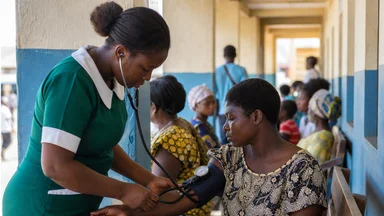
Closing the screening gap in Manila will require more than buying new scopes. It will require rethinking training. Public hospitals could invest in sigmoidoscopy training for rural health workers, including nurses and midwives, who can perform the procedure in community settings under remote supervision. This model has been used in parts of India and Africa, and it could work in the Philippines, where the geography makes central hospital visits difficult for many.
Fecal immunochemical tests offer a low-cost triage tool. A patient with a positive FIT could be referred for a diagnostic scope, while a negative result could allow a longer screening interval. This approach reduces the demand for colonoscopy, which is often the bottleneck in public systems. It also allows sigmoidoscopy to be used for the distal colon, with the understanding that a FIT-positive patient might need a full colonoscopy anyway.
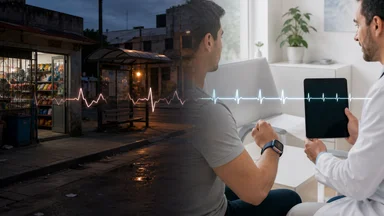
Telemedicine could extend the reach of specialists. A rural health worker could perform a sigmoidoscopy, capture images, and send them to a gastroenterologist in Manila for review. This is already happening in some pilot programs, and it could be scaled with modest investment in internet connectivity and basic imaging software. Public-private partnerships could help with scope donations and maintenance, though such arrangements need careful oversight to avoid conflicts of interest.
Finally, training curricula need to reflect the reality of the health system. Not every trainee will end up in a private hospital with a full endoscopy suite. Public hospitals should ensure that every gastroenterology fellow graduates with at least a basic competence in sigmoidoscopy, and that community health workers have a clear pathway to learn the procedure. This is not about rejecting colonoscopy. It is about using the right tool for the right patient, and about ensuring that the poorest patients in Manila have access to a screening test that works.
Counterarguments and Trade-offs
Not everyone agrees that sigmoidoscopy deserves a revival. Some gastroenterologists argue that colonoscopy's ability to examine the entire colon in one session makes it inherently superior, and that promoting sigmoidoscopy would be a step backward. They point to the risk of interval cancers, which can arise in the right colon after a negative sigmoidoscopy, and the potential for missed lesions that could have been detected by a full scope. In a country like the Philippines, where follow-up rates are often low, a negative sigmoidoscopy might provide false reassurance, leading patients to skip further screening for years.
There is also the question of patient preference. In Manila's private clinics, the demand for sedation is high. Many patients prefer to be asleep during any endoscopic procedure, and colonoscopy offers that option routinely. Sigmoidoscopy, by contrast, is often performed without sedation, and the discomfort of the procedure can deter patients from returning for repeat screenings. A patient who is awake may be less likely to tolerate a second sigmoidoscopy, even if it is clinically appropriate.
Cost-effectiveness analyses from high-income countries have produced mixed results. Some models suggest that colonoscopy every ten years is cost-effective compared with sigmoidoscopy every five years, especially when the costs of missed right-sided cancers are accounted for. However, these models assume high adherence and quality, which may not hold in Manila's public sector. In resource-constrained settings, the lower cost and higher feasibility of sigmoidoscopy may tip the balance, particularly when combined with FIT triage.
The Human Cost of the Gap
Behind the statistics are individual stories. A 55-year-old vendor in Divisoria, who has never had a screening test, notices blood in her stool. She waits weeks for an appointment at a public hospital, only to be told that the endoscopy unit is booked for the next month. When she finally gets a sigmoidoscopy, the scope cannot reach the lesion, and she is referred for a colonoscopy that she cannot afford. She delays, and by the time she is diagnosed, the cancer has spread.
In contrast, a 50-year-old executive in Bonifacio Global City, whose annual check-up includes a colonoscopy as a standard benefit, has a small polyp removed during the procedure. He is told to come back in five years, and he will, because his insurance covers it. The difference in outcomes is not primarily biological; it is structural. The executive has access to prevention, the vendor does not.
This is not to say that colonoscopy is unnecessary or that sigmoidoscopy is a panacea. Both tools have limitations, and the evidence does not support a one-size-fits-all approach. But the current distribution of services in Manila is not based on evidence or need; it is based on purchasing power. Until training and reimbursement policies align with public health priorities, the gap will persist, and colorectal cancer will continue to claim lives that could have been saved.
Conclusion
The divide between colonoscopy and sigmoidoscopy in Manila is not a technical problem. It is a reflection of how resources flow, how incentives shape practice, and how a city's wealth gap determines who gets the best of modern medicine and who gets the leftovers. Closing that gap will not be quick, and it will not be easy. But it is a goal worth pursuing, one patient at a time.
This article is for informational purposes only and is not a substitute for professional medical advice. Always consult a qualified healthcare provider for screening recommendations tailored to your individual risk.