Hypertension Trials Set Lower Targets Than Ghana’s Clinics Can Measure
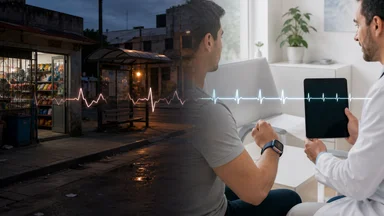
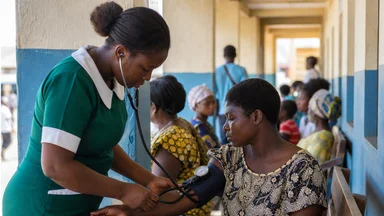
In a busy clinic in Accra, a nurse wraps a blood pressure cuff around a patient's arm and takes a single reading while the patient sits on a plastic chair in the corridor. The number is recorded, the patient is prescribed a medication, and the next person is called. There is no repeat measurement, no matching of cuff size to arm circumference, and no calibration log for the digital device that may have been dropped twice last year. The target the nurse is supposed to reach, however, comes from clinical trials conducted in high-income hospitals with dedicated research staff and validated equipment.
A Target Written for Another Country
Global hypertension guidelines, including those from the World Health Organization and major cardiology societies, now commonly recommend lowering blood pressure to below 130/80 mmHg for most adults. This target emerged from landmark trials that demonstrated cardiovascular benefits from intensive blood pressure control. But the underlying assumption of these guidelines is that a clinic can measure blood pressure accurately enough to make treatment decisions based on a 5 or 10 mmHg difference.
In Ghana, that assumption often fails. Many public clinics, especially outside the major cities, still rely on mercury sphygmomanometers, which require regular servicing and are increasingly difficult to source as mercury is phased out globally. Digital devices, where available, are rarely calibrated or maintained. A device that reads 10 mmHg high or low can push a patient into or out of the treatment threshold without any real change in their condition.
The gap between the guideline's expectation and the clinic's capability is not a minor inconvenience. It affects treatment decisions, medication doses, and patient trust. When a patient's blood pressure appears to be controlled according to a faulty reading, they may be told to continue a medication that is not working. When a reading appears high, they may receive a higher dose than necessary and experience side effects.
For clinicians in Ghana, the target is not just a number; it is a daily reminder of the distance between the evidence base and the working environment. Some simply ignore the target and treat based on higher thresholds, which may be more pragmatic but creates its own inconsistencies. Others try to follow the guideline and end up making decisions on unreliable data.
The Trial Evidence Behind the Numbers
The push toward intensive blood pressure targets comes largely from the SPRINT trial, which randomly assigned over 9,000 adults with high cardiovascular risk to a systolic target of less than 120 mmHg or less than 140 mmHg. The trial was stopped early because of a significant reduction in cardiovascular events and all-cause mortality in the intensive group. The absolute risk reduction was modest, roughly 1 to 2 percentage points over a few years, but the results were widely interpreted as support for lower targets.
However, SPRINT was conducted in the United States, with a mostly older, high-income population. Participants were measured using an automated office blood pressure device that took multiple readings with the patient resting alone in a quiet room. This measurement method tends to produce lower readings than the typical single measurement taken in a busy clinic. The trial also had rigorous quality control and dedicated staff to ensure measurement accuracy.
Those conditions are far from the reality in many Ghanaian clinics. A single reading taken in a corridor with the patient chatting or anxious is likely to be higher than a standardized automated measurement. If the same treatment target is applied to this higher baseline, clinicians may over-treat patients who would be at acceptable risk with less intensive therapy. The reverse is also possible: a faulty device that reads low could lead to under-treatment.
Researchers have long noted that clinical trial populations are not representative of global populations, but the assumption has been that the relative benefits of treatment apply broadly. The question is whether the absolute benefits justify the potential harms when the measurement error is as large as the treatment effect. Some experts argue that for low-income settings, the priority should be identifying and treating those with severe hypertension, where the benefits are clearest and the measurement error is relatively smaller.
What Clinics in Ghana Actually Measure
Observational data from Ghana paint a clear picture. A 2019 survey of 40 primary care facilities in the Ashanti region found that only 12% had a validated blood pressure device, and none had a calibration schedule. The same survey reported that 78% of nurses had received no formal training on blood pressure measurement technique in the preceding two years. These findings align with a 2020 study in the Greater Accra region that observed 150 patient encounters: in 82% of cases, blood pressure was measured only once, and in 67% of cases, the cuff was not matched to arm circumference.
The consequences are measurable. A 2018 cross-sectional study in Kumasi compared clinic readings with standardized research measurements taken the same day. The clinic readings were, on average, 8 mmHg higher for systolic and 5 mmHg higher for diastolic pressure. This systematic overestimation means that many patients are labeled as having uncontrolled hypertension when their true blood pressure may be within target. Conversely, a faulty device that reads low could lead to under-treatment, but the more common bias appears to be toward higher readings, likely due to measurement technique and patient anxiety.
These measurement practices are not unique to Ghana, but they are more consequential in settings where resources are scarce. In a high-income clinic, a suspicious reading can be repeated with a different device or a home blood pressure monitor. In Ghana, the patient may be sent home with a prescription based on that single reading. Home monitoring is almost nonexistent, and patients rarely have access to a device that they can use to track their own numbers.
The lack of standardized training is a key issue. Proper blood pressure measurement requires the patient to be seated quietly for at least five minutes, the arm supported at heart level, the correct cuff size, and the bladder deflated slowly. Each of these steps can affect the reading by several mmHg. In a busy clinic with dozens of patients waiting, these steps are often skipped to save time.
Without accurate measurement, the entire edifice of hypertension management, from diagnosis to titration, is built on sand. A patient labeled as hypertensive may not be, or a patient with severe hypertension may be missed because the reading was taken at a moment when their blood pressure temporarily dipped. The target of 130/80 mmHg becomes meaningless if the measurement error is plus or minus 10 mmHg or more.
When Guidelines Collide with Reality
Clinicians in Ghana face a daily dilemma: follow a guideline that seems unachievable, or adapt it in ways that may not be evidence-based. Some choose the former and end up over-treating patients. Others choose the latter and treat only those with clearly elevated readings, typically above 160/100 mmHg, which is a more conservative approach that may leave many patients under-treated.
The risks of over-treatment and under-treatment are real. Blood pressure medications can cause dizziness, fatigue, and falls, especially in older adults. If a patient's blood pressure is actually lower than the reading suggests, a higher dose could lead to symptomatic hypotension. On the other hand, if a device reads low, a patient with severe hypertension may be told their blood pressure is normal and sent home without medication, increasing the risk of stroke, heart attack, and kidney failure over time.
Patients, for their part, may lose trust in a system that gives them different readings on different visits, or that tells them their blood pressure is high when they feel fine. This distrust can lead to missed appointments and poor adherence to medication. The evidence-practice gap, already wide, widens silently as clinicians and patients navigate a system that does not match the guidelines.
Cheaper Alternatives Exist but Are Ignored
There are simpler, more achievable targets that could be adopted in low-resource settings. The WHO HEARTS technical package, for example, provides a framework for cardiovascular disease management in primary care, with a focus on standardized treatment protocols and simplified drug regimens. It does not insist on the 130/80 mmHg target for everyone, but rather recommends treating those with systolic blood pressure of 160 mmHg or higher, and using a lower threshold only when feasible.
Low-cost validated blood pressure devices are available, and some organizations have worked to distribute them in African countries. For instance, the Ghana Health Service, with support from the World Health Organization, piloted a program in the Northern Region that supplied validated automated devices to 20 clinics and trained staff in proper technique. A 2021 evaluation of that pilot found that the proportion of readings taken correctly increased from 34% to 76%, and the proportion of patients with controlled blood pressure rose from 22% to 41% over 12 months.
However, the devices are only useful if they are calibrated and used correctly. Training health workers in proper measurement technique costs little, but it requires time and follow-up, which are often in short supply. Funding for hypertension programs tends to go toward drug procurement, not measurement infrastructure, because drugs are tangible and easily tracked.
The result is a paradox: the tools that would make the guideline achievable are cheap, but they are not prioritized. A clinic that spent a few hundred dollars on validated devices and a half-day of training could improve the accuracy of every blood pressure reading taken, but such investments are rarely made. Instead, clinics continue to rely on devices that are broken or inaccurate, and patients continue to receive suboptimal care.
Some argue that the global guidelines are simply not meant for low-income settings, and that local adaptations are necessary. Others worry that lowering the target to 160 mmHg would be a step backward, given the evidence that intensive control saves lives even in lower-risk populations. The disagreement is not about the science, but about how to balance the ideal with the practical.
A Pragmatic Path for Ghana's Clinics
A pragmatic approach might involve staged targets based on the resources available. In clinics with validated equipment and trained staff, the lower target could be pursued. In clinics where measurement is less reliable, a higher threshold, such as 150 or 160 mmHg systolic, could be used for initiating treatment, with a plan to step down once the patient is stable and measurement improves.
Accurate measurement should be the first priority, not the last. This means investing in devices that are validated for clinical use, establishing regular calibration schedules, and training staff in the correct technique. It also means repeating measurements on separate visits before making a diagnosis of hypertension, as recommended by guidelines but often skipped in practice.
Community health workers can play a role in supporting patients with home monitoring or in taking measurements in the community, where patients may be more relaxed and readings may be more representative of their usual blood pressure. This approach has been used successfully in other low-income settings, such as in Bangladesh and Pakistan, where trained community health workers using validated devices have improved hypertension detection and control rates. In Ghana, a pilot program in the Upper East Region is currently testing this model, with preliminary results showing increased patient engagement and better follow-up.
Ultimately, the goal is not to lower the target to accommodate poor measurement, but to improve measurement so that the target can be pursued safely. This is a long-term project, and in the meantime, clinicians need guidance that acknowledges the reality of their clinics. The guideline should be a goal, not a barrier.
The Real Controversy Is Not the Number
The debate over the optimal target obscures a deeper issue: the inequity in access to accurate diagnosis and treatment. A patient in a well-resourced clinic can have their blood pressure measured multiple times, with home monitoring and ambulatory monitoring if needed. A patient in a Ghanaian clinic may have one reading taken by a stressed nurse with an uncalibrated device. The number is the same, but the meaning is different.
Clinical trials like SPRINT answer questions that many clinics cannot even ask. They assume a level of measurement accuracy that is simply not available in much of the world. The evidence is real, but its applicability is limited by context. Researchers have a responsibility to report not just the effect size, but also the conditions under which the effect was observed, so that clinicians can judge whether the result applies to their patients.
Guidelines need local adaptation, not dilution. This means involving clinicians from low-income settings in the writing of guidelines, and providing clear guidance on how to implement targets when resources are limited. It also means funding research that tests simplified strategies in these settings, rather than relying on extrapolation from high-income trials.
As Ghana's clinics continue to struggle with measurement accuracy, one question remains open: should the country adopt a single national target that is achievable with current resources, or should it push for the lower target and invest heavily in measurement infrastructure? The answer will shape the health of millions. For now, the priority is clear: accurate measurement is the foundation on which all hypertension care rests. Without it, the number on the guideline is just a number, and patients are left with the consequences.