Zambia’s Epilepsy Drug Supply Chain Skips Rural Clinics While Seizures Rise Untreated
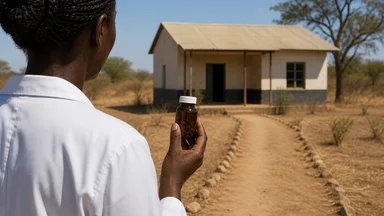
In Zambia's Eastern Province, a farmer with epilepsy may wait months for phenobarbital. The drug that could control his seizures sits in a central warehouse in Lusaka, but the journey to his rural clinic is fraught with obstacles. This gap between availability and access is not a simple logistics problem; it is a failure of a supply chain that systematically underestimates rural demand, leaving patients to face the consequences of untreated epilepsy.
The Last Mile That Breaks: Why Rural Clinics Run Dry
Zambia's public health system procures essential medicines through the Medical Stores Limited (MSL), a central agency that supplies hospitals and clinics across the country. In theory, the system works: the central warehouse in Lusaka stocks antiepileptic drugs like carbamazepine and phenobarbital. District depots receive periodic deliveries, and from there, rural health posts are supposed to receive their share. In practice, the last mile is where the chain breaks.
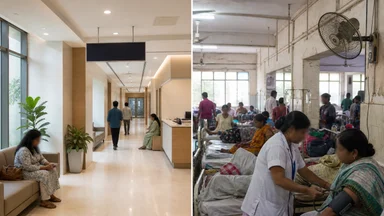
Rural health posts often have no cold chain, no reliable transport, and no real-time inventory tracking. Deliveries are sporadic, and when they arrive, they may not include the quantities ordered. A nurse at Katete District Hospital in Eastern Province described stockouts of phenobarbital lasting for months. "We tell patients to come back next month, but we don't know when the next delivery will be," she said. "Some travel 100 kilometers and find nothing." Patients are told to come back later, or to travel to a larger facility that may also be out of stock.
The distances involved are significant. For many patients, the nearest clinic with a reliable supply is 50 to 100 kilometers away. Public transport is scarce, and the cost of a round trip can exceed a day's wages. Some patients simply give up and go without medication, which leads to more seizures, more injuries, and more stigma. The supply chain's failure is not just an inconvenience; it is a direct cause of untreated epilepsy.
Why does the last mile fail so consistently? One reason is that quantification is based on urban consumption patterns. Central planners look at past usage in major hospitals, which may not reflect the needs of rural populations. Epilepsy is often underdiagnosed in rural areas, so reported demand is lower than the true need. This creates a self-fulfilling cycle: low reported demand leads to low allocation, which leads to stockouts, which discourages patients from seeking care, which keeps reported demand low.
Seizure Biology Meets Stockout: The Clinical Toll
When a patient with epilepsy stops taking their medication, the risk of seizures rises sharply. The biology is straightforward: antiepileptic drugs work by stabilising neuronal membranes and reducing abnormal electrical discharges. Without them, the brain's threshold for seizure activity drops. A single missed dose can trigger a seizure in someone with well-controlled epilepsy, and repeated gaps in treatment can lead to a pattern of uncontrolled fits.
The consequences extend beyond the immediate event. Repeated seizures can cause neuronal damage, particularly in the hippocampus, a region critical for memory. Over time, patients may experience cognitive decline, memory problems, and difficulties with concentration. This is especially devastating for children, whose developing brains are more vulnerable to the effects of uncontrolled seizures.
There is also the risk of status epilepticus, a condition where seizures do not stop on their own. Status epilepticus is a medical emergency that can cause permanent brain damage or death. In rural Zambia, where emergency services are limited, a prolonged seizure may be fatal before the patient reaches a hospital. Even when patients survive, they often sustain injuries: burns from falling into fires, fractures from falls, and head injuries from convulsions.
The psychological toll is equally severe. Epilepsy carries a heavy stigma in many Zambian communities, where seizures are sometimes attributed to witchcraft or possession. Patients who experience seizures in public may be ostracised, and families may hide affected members. This stigma compounds the treatment gap, as people are reluctant to seek help for a condition they fear will bring shame.
Quantifying the Gap: Data from Zambia's Health System
The World Health Organization estimates that epilepsy affects roughly 1% of the global population, and Zambia is no exception. With a population of about 19 million, that suggests around 190,000 people with active epilepsy. Yet the treatment gap, defined as the proportion of people with epilepsy who do not receive adequate treatment, is estimated to exceed 80% in rural areas. This means that for every ten people with epilepsy in a rural district, fewer than two are getting the medication they need.
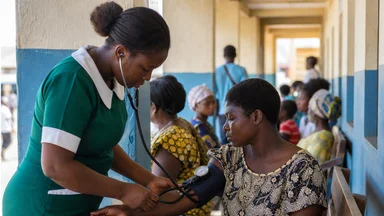
Zambia has very few neurologists, perhaps one or two in the entire country, and they are concentrated in Lusaka. Most people with epilepsy are cared for by clinical officers and nurses who have limited training in neurology. The WHO's mhGAP programme, which trains non-specialists to diagnose and manage mental and neurological conditions, has been rolled out in some districts, but coverage is patchy.
Stockout reports are common. A survey conducted in the Copperbelt and Eastern provinces found that between 30% and 50% of health facilities had experienced a stockout of at least one antiepileptic drug in the past year. The most commonly affected drugs were phenobarbital and carbamazepine, which are the first-line treatments in many settings. In some facilities, the stockout lasted for weeks or even months.
These figures are based on facility-level data and may not capture the full picture. Patients who do not come to a facility are invisible in the statistics. A study in a rural district of Eastern Province found that many people with epilepsy had never been diagnosed, and among those who had, many had stopped treatment because of cost or distance. The true treatment gap is likely higher than the 80% estimate.
How the Supply Chain Actually Works (and Fails)
The supply chain for essential medicines in Zambia follows a standard model: central procurement, district storage, and facility distribution. The Medical Stores Limited is responsible for forecasting demand, procuring drugs, and distributing them to district health offices. From there, district officers are supposed to deliver to health posts, often using their own transport. This system works well for medicines with high demand, such as antiretrovirals for HIV, which receive dedicated funding and monitoring.
Epilepsy drugs, however, are not a donor priority. Donor funding in Zambia has historically focused on HIV/AIDS, tuberculosis, and malaria, which account for a large share of the disease burden. Epilepsy, despite its prevalence, receives little external support. The government's own budget for essential medicines is limited, and within that budget, antiepileptic drugs may not be prioritised.
Transport is another weak link. The distribution contracts for MSL often favor routes on paved roads, which connect major towns. Rural health posts are frequently off the main roads, accessible only by dirt tracks that become impassable during the rainy season. A delivery that reaches the district depot may not go further, because there is no vehicle, no fuel, or no road. In contrast, HIV drugs are often delivered via dedicated couriers with refrigerated trucks, while epilepsy drugs are lumped into general shipments that may be delayed or diverted.
Real-time inventory tracking is almost nonexistent. The MSL uses a paper-based system, and data on stock levels at health posts is often months old. This means that when a district places an order, it may be based on outdated information, leading to overstocking in some places and stockouts in others. The lack of visibility also makes it difficult to identify problems early or to redistribute stock from facilities with excess to those with shortages.
Community Workers Fill the Void—Without Training
In the absence of reliable supplies from the formal system, community health volunteers often step in. These volunteers, who are not formally employed by the health system, may receive small stipends or work for free. They are trained in basic health promotion, but not in the management of epilepsy. Despite this, they are often the first point of contact for people with seizures.
Some volunteers have taken it upon themselves to distribute rescue medications, such as diazepam, to families of people with epilepsy, according to a 2019 report by the Zambian Ministry of Health. This can be life-saving in the event of a prolonged seizure, but it also carries risks. Without proper training, volunteers may not know how to recognise status epilepticus or when to refer a patient to a higher level of care. They may also inadvertently provide incorrect doses or outdated advice.
Traditional healers are also a common first stop for epilepsy in rural Zambia. Many families believe that seizures are caused by spiritual forces, and they may consult a healer before seeking biomedical care. This is not necessarily harmful, but it often delays proper diagnosis and treatment. In some cases, traditional healers may advise against taking antiepileptic drugs, leading to poorer outcomes.
Community stigma plays a role in delaying care. People with epilepsy may be hidden by their families, and they may not attend school or work for fear of discrimination. This social exclusion compounds the medical problem, making it harder for patients to adhere to treatment and for health workers to identify and support them.
What Works: Evidence from Neighboring Countries
Zambia is not alone in facing these challenges, and there are lessons from neighbouring countries. In Kenya, mobile clinics have been used to bring epilepsy services to rural areas, reducing the treatment gap in some communities. A study in a rural district of Kenya found that a mobile clinic, staffed by a clinical officer and a nurse, was able to diagnose and treat epilepsy effectively, with good adherence rates among patients who were followed up.
Uganda has piloted a community-based distribution programme in which trained community health workers deliver antiepileptic drugs to patients in their homes. The programme reduced travel time and costs for patients, and it improved medication adherence. The WHO's mhGAP programme has been implemented in several countries, including Uganda, and has been shown to improve the ability of non-specialist health workers to manage epilepsy and other mental health conditions.
In Tanzania, self-management groups for people with epilepsy have been established, providing peer support and education about medication and seizure triggers. These groups have been associated with better seizure control and reduced stigma. In Rwanda, task-shifting to nurses has been shown to be feasible and effective for epilepsy care, with nurses able to manage uncomplicated cases and refer complex ones to doctors.
These examples suggest that a combination of task-shifting, community-based delivery, and peer support can improve outcomes. However, they also require a reliable supply of drugs. Without that, no amount of training or community engagement can compensate. The Zambian government has expressed interest in scaling up such models, but implementation has been slow.
Practical Steps: From Stockouts to Sustained Care
Addressing the supply chain failure requires several practical steps. First, epilepsy drugs should be bundled with other chronic disease medications, such as those for hypertension and diabetes, in a single delivery package. This would increase the volume of orders and make it more cost-effective for MSL to distribute them. It would also reduce the risk that epilepsy drugs are forgotten when separate orders are placed.
Second, SMS-based stock alerts could provide real-time data on stock levels at health posts. Simple mobile phones are widely available in rural Zambia, and a system where health workers send a text message with their stock count each week could give district managers the information they need to redistribute supplies. This would be a low-cost intervention that could significantly reduce stockouts.
Third, training for rural health workers should include seizure first aid and the management of status epilepticus. The WHO's mhGAP programme provides a framework for this, but it needs to be rolled out more widely. Community health volunteers, who are often the first point of contact, should also receive basic training in epilepsy recognition and referral.
Fourth, engaging traditional healers as referral partners, rather than rivals, could help reduce delays in seeking care. Healers who are educated about epilepsy may be more likely to refer patients to health facilities, and they can also help reduce stigma in their communities. Some programmes in other countries have successfully collaborated with traditional healers, and this approach could be adapted to Zambia.
Fifth, advocating for local production of generic phenobarbital could reduce costs and improve availability. Phenobarbital is inexpensive and on the WHO Essential Medicines List, but it is not manufactured in Zambia. Local production would require investment, but it could make the drug more affordable and less dependent on international supply chains.
Finally, tracking the treatment gap with district-level dashboards would help identify areas where the supply chain is failing and where interventions are needed. This would require investment in health information systems, but it would allow for more targeted responses. None of these steps is a silver bullet, but together they could begin to close the gap.
However, these recommendations are not without challenges. Bundling epilepsy drugs with other chronic disease medications may require changes to procurement systems and may increase the risk of stockouts for other essential drugs if not carefully managed. SMS-based stock alerts depend on reliable mobile network coverage, which is not universal in rural areas, and health workers may lack the time or incentive to send regular updates. Training programmes require funding and human resources, and scaling them up across the country would be a significant undertaking. Engaging traditional healers may be met with resistance from both the healers and the biomedical community, and establishing trust takes time. Local production of phenobarbital would require substantial capital investment and regulatory oversight, and it may not be economically viable given the relatively small market. Finally, district-level dashboards depend on accurate and timely data, which is currently lacking, and building the necessary infrastructure would be a long-term project. These trade-offs must be weighed carefully, and any intervention should be piloted and evaluated before being scaled up.
This article is for informational purposes only and is not a substitute for professional medical advice, diagnosis, or treatment. Always seek the advice of your physician or other qualified health provider with any questions you may have regarding a medical condition.