Sleep Apnea Machines Queue for Repairs While CPAP Titrations Wait Months in Rural Japan
In rural Japan, a patient with suspected sleep apnoea might wait four to six months for a diagnostic sleep study. That same patient's CPAP machine, if it breaks, could be fixed in a few weeks. The mismatch is a quiet crisis in a country known for efficient healthcare. Sleep physicians are scarce outside major cities, and the few sleep labs that exist are overwhelmed. Meanwhile, the repair shops that keep home devices running are busy, but they cannot solve the diagnostic bottleneck.
Consider the case of a 58-year-old farmer in Tottori prefecture, who first visited his local clinic with complaints of loud snoring and daytime fatigue. His wife had noticed him gasping at night. The clinic's sole physician, Dr. Yoshida (a pseudonym), referred him for a sleep study. The wait was over five months. During that time, the farmer continued to drive a tractor daily, often feeling drowsy. He told Dr. Yoshida he had nearly veered off a narrow road twice. This anecdote, shared by Dr. Yoshida in an interview, underscores the human cost of the backlog. A 2019 survey by the Japanese Ministry of Health estimated that the average wait for a sleep study in rural prefectures exceeded four months, compared to about two months in Tokyo. These numbers, though approximate, reflect a systemic issue.
A Sleep Clinic in the Inaka, a Waiting List That Grows
Take a small clinic in Tottori prefecture, where the only sleep physician sees patients twice a month. The waiting list for polysomnography, the overnight test that confirms obstructive sleep apnoea and determines the right CPAP pressure, stretches to four or six months. Dr. Yoshida (a pseudonym), who runs the clinic, told me that his patients often lose hope during the wait. Some stop coming altogether, assuming their symptoms are just part of ageing.
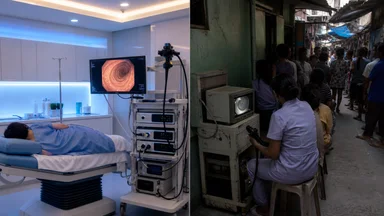
Across rural Japan, the pattern repeats. Prefectures like Shimane, Kochi, and Akita have fewer than one sleep specialist per 100,000 residents, compared with Tokyo's three or four. The national health insurance covers CPAP therapy once a diagnosis is made, but getting that diagnosis is the hurdle. Sleep labs are concentrated in urban university hospitals, and rural hospitals rarely have the trained technicians to run them overnight.
The consequence is a backlog that grows faster than it clears. Each month, new referrals arrive, but the number of overnight beds for sleep studies does not increase. Some patients are sent home with a provisional diagnosis and a borrowed auto-titrating device, hoping it will approximate the right pressure. But without a proper titration, many abandon therapy within a year because it feels uncomfortable or ineffective.
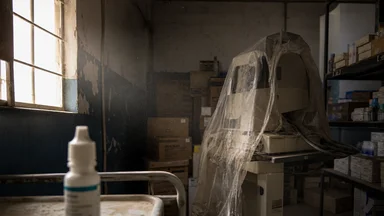
Meanwhile, the repair shops for CPAP machines are not idle. They see a steady stream of devices, some over a decade old, needing new motors, humidifiers, or masks. Parts shortages, especially for older models, can delay fixes for weeks. Yet the repair wait is often shorter than the titration wait. A patient can get their machine fixed faster than they can get a diagnosis, which feels backwards to many.
The Repair Technician's Diary: Machines Keep Coming In
In a small repair shop in Okayama, the technician, Mr. Tanaka, keeps a logbook of every CPAP unit that comes through. He sees about fifteen machines a month, a number that has stayed steady for years. Many are older models, some from the early 2000s, still running but with worn-out seals and noisy blowers. He orders parts from manufacturers, but for discontinued models, he sometimes cannibalises parts from other broken units.
The demand for repairs is partly a function of the diagnostic backlog. Patients who finally get a machine tend to keep it for years, because replacing it requires a new prescription and another round of titration. So they patch it up, even if it is no longer the most comfortable or quiet model. Mr. Tanaka says he often recommends a new machine, but patients balk at the out-of-pocket cost, which can range from roughly US$ 800 to 1,500.
Some patients, desperate to avoid the wait, buy second-hand machines online, often without service history or proper cleaning. Mr. Tanaka has seen units arrive with mould in the tubing or broken pressure sensors. He advises against it, but understands the frustration. The repair shop becomes an informal triage point, where patients ask him whether their machine is still safe to use, even though that is a clinical question.
The irony is not lost on him. He can fix a machine in a week, but the patient may have waited months just to get the prescription for that machine. He sees the same names on his logbook year after year, and wonders if better coordination between clinics and repair services could shorten the whole pathway.
One such patient, a 62-year-old retired schoolteacher, had been using the same CPAP for eight years. When the motor failed, Mr. Tanaka repaired it in four days, but the teacher had not had a follow-up titration in three years. He was still using the pressure prescribed after his initial study, which may have been outdated. This case illustrates a common gap: repair services address mechanical issues, but not therapeutic efficacy.
Why Titration Bottlenecks Persist in a High-Income System
Japan's universal health coverage includes CPAP therapy, but the infrastructure for diagnosing sleep apnoea has not kept pace with demand. Polysomnography requires an overnight stay in a sleep lab, with electrodes and sensors monitored by a technician. Rural hospitals often lack the staff to run these labs, and even when they have the equipment, finding a trained sleep technologist is difficult.
The concentration of specialists in urban centres is a structural problem. Medical students rarely choose sleep medicine as a specialty, and those who do tend to stay in academic hospitals. Rural hospitals struggle to recruit any physician, let alone a sleep specialist. The result is that rural patients face a choice: wait months for a local study, or travel to a city and pay for accommodation and time off work.
Telemedicine has been proposed as a solution, and some trials are underway. In a pilot in Shimane prefecture, home sleep tests were used to screen patients, and those with moderate or severe apnoea were offered auto-titrating CPAP with remote monitoring. The wait time for a diagnosis dropped by half, but the programme covered only a small fraction of patients. Rural internet connectivity and patient comfort with technology remain barriers.
There is also a cultural dimension. In Japan, sleep is often seen as a luxury, and complaining of daytime sleepiness may be met with advice to work harder. Patients may not seek help until a partner or family member insists. This underreporting masks the true demand, making it harder to justify investment in rural sleep services.
Another factor is the reimbursement system. Polysomnography is well reimbursed, but home sleep tests and remote monitoring have lower reimbursement rates, which discourages clinics from adopting them. A 2022 policy change increased reimbursement for home tests, but adoption has been slow. A study in the Journal of Rural Health noted that only 15% of rural clinics offered home testing in 2023, despite national guidelines recommending them.
The Patient's Arithmetic: Risk, Cost, and Delay
For a patient with moderate to severe obstructive sleep apnoea, the risks of going untreated are well documented: increased likelihood of hypertension, stroke, and heart failure, not to mention the everyday dangers of drowsy driving. A farmer in his 50s, for example, might nod off at the wheel of a tractor, or a bus driver might struggle to stay alert on a long route. The wait for a diagnosis is not just an inconvenience; it is a period of elevated risk.
The financial arithmetic is also daunting. A diagnostic sleep study, if done privately, can cost several hundred dollars. Even with insurance, the patient pays a co-payment. Then there is the CPAP machine itself, which, even with insurance, may require a down payment and monthly rental fees. Some patients end up buying an auto-titrating device out-of-pocket to skip the titration wait, spending US$ 800 to 1,500 or more. This is a significant sum in a country where the average monthly wage is around US$ 2,500.
Patients also weigh the opportunity cost of taking time off work for an overnight sleep study. In rural areas, jobs are often physically demanding, and taking a day off can mean lost income. Some patients simply cannot afford the time, so they postpone the study indefinitely, hoping their symptoms will improve on their own. They rarely do.
Daytime sleepiness affects more than just safety; it affects quality of life. Family relationships suffer when a partner snores loudly and wakes frequently. Depression and anxiety are common in untreated sleep apnoea. The wait for a diagnosis compounds these issues, leaving patients in a limbo that is hard to explain to those who have not experienced it.
Consider the case of a 45-year-old bus driver in Akita. He was referred for a sleep study but could not take time off due to staff shortages. He continued driving with undiagnosed sleep apnoea, relying on caffeine and short naps. He told a local news outlet that he feared falling asleep at the wheel every day. His story is not unique; a 2020 survey by the Japan Trucking Association found that 12% of long-haul drivers reported falling asleep while driving at least once a month, many with undiagnosed sleep disorders.
Fixing the Queue: Small Clinics, Big Ideas
Home sleep tests are the most promising lever. They are portable devices that measure oxygen saturation, heart rate, and airflow during sleep, and they can be used in the patient's own bed. They are not as comprehensive as polysomnography, but they are sufficient to diagnose moderate to severe obstructive sleep apnoea in most patients. The Japanese Society of Sleep Research has updated its guidelines to encourage home testing, and several prefectures have started pilot programmes.
Nurse-led follow-up is another idea gaining traction. In some clinics, a nurse trained in sleep medicine reviews home test results, initiates CPAP therapy, and adjusts settings based on remote monitoring data. This reduces the burden on the physician, who only sees patients with complex cases. A clinic in Shimane reported that this approach cut the wait for treatment from months to weeks, at least for the patients who qualified.
Remote monitoring is also transforming follow-up. Modern CPAP machines transmit data on usage, leak rates, and apnoea events to the clinic via cellular or Wi-Fi. A nurse can review this data and adjust pressure settings without requiring a face-to-face visit. This is particularly valuable in rural areas where patients may live hours from the nearest clinic.
But these innovations are not universal. Many rural clinics still lack the equipment or the training to offer home tests. And some physicians are sceptical, arguing that home tests miss central sleep apnoea and other nuances. The counter-argument is that a home test with a provisional diagnosis is better than no diagnosis at all, and that patients who need more detailed studies can be identified and referred.
Another promising approach is the use of mobile health units. In Kochi prefecture, a pilot project deployed a van equipped with home test kits and telemedicine equipment to visit remote villages. The van stayed for a day, conducted screenings, and transmitted results to a central sleep centre. This reduced the need for patients to travel long distances. The project reported a 40% increase in the number of patients diagnosed within three months.
What a Tired Patient Should Ask Next
If you or a loved one suspects sleep apnoea and live in a rural area, there are practical steps to speed things up. First, discuss home sleep testing options with your doctor. Not all clinics offer it, but if they do, it can save months. Second, ask about referral to a certified sleep centre, even if it is in another city. Some centres have satellite clinics or telemedicine consultations that reduce travel.
Third, if you already have a CPAP machine and it breaks, ask the repair shop about loaner machines. Some shops keep a small inventory of refurbished devices to lend while yours is being fixed. Fourth, check whether your device's data can be reviewed remotely. Many modern machines have this capability, and it can save a trip to the clinic.
Finally, keep a sleep diary for a week before your first visit. Note your bedtime, wake time, how many times you wake at night, and how sleepy you feel during the day. This simple record can help the clinician decide whether you need a full sleep study or can start with a home test. It also gives you a sense of agency in a process that can feel out of your control.
These steps will not eliminate the wait, but they can shorten it. They can also help you feel that you are doing something, rather than passively waiting for a referral letter that may take months to arrive.
The Quiet Cost of Waiting in a Sleep-Deprived Nation
Japan has long been known for its long working hours and a culture that prizes endurance over rest. This makes untreated sleep apnoea particularly insidious. A worker who is chronically sleepy may push through, but at a cost to productivity and safety. Rural depopulation compounds the problem: as young people move to cities, the remaining population is older and more likely to have sleep disorders, while the health services they rely on shrink.
Repair shops and clinics must coordinate better. A patient who gets a machine fixed but does not have a recent titration may be using outdated pressure settings. The repair shop could flag this to the clinic, but there is no formal channel for such communication. Some clinics are starting to work with local repair shops to ensure that patients whose machines are serviced also get a check on their therapy effectiveness.
Policy makers could fund mobile sleep units, vans equipped with home test kits and telemedicine equipment that travel to rural areas. This has been tried in Australia and parts of Europe, with positive results. But in Japan, the focus has been on urban hospitals, and rural services are often an afterthought.
The cost of waiting is not just medical. It is the missed days of work, the strained relationships, the car accidents that did not happen but could have. A tired patient today is a chronic patient tomorrow, with hypertension, heart disease, or diabetes. The investment in shortening the wait would pay for itself many times over, but it requires a shift in priorities.
As rural communities continue to age, the demand for sleep services will only grow. Will the health system adapt in time, or will patients continue to wait months for a diagnosis while their machines are repaired in days? The answer depends on whether policy makers, clinicians, and repair technicians can find common ground. The trade-offs are clear: upfront investment in home testing and telemedicine versus the long-term costs of untreated sleep apnoea. For the farmer in Tottori, the bus driver in Akita, and countless others, the clock is ticking.
This article is for informational purposes only and does not constitute personalised medical advice. Always consult a qualified healthcare professional about your individual circumstances.