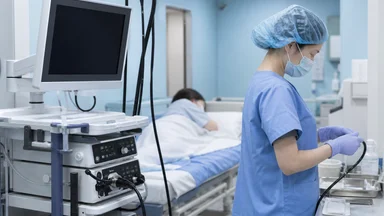
Smoke From Brick Kilns Fills Dhaka Lungs While Spirometers Gather Dust in Clinics
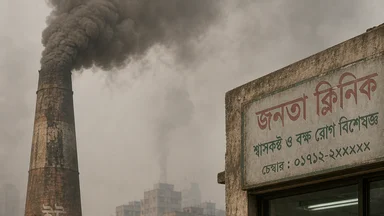
On a foggy December morning, the air in Dhaka carries a sharp, acrid bite that residents describe as a burning chest. The city's roughly 1,000 brick kilns, ringed around the urban periphery, burn low-grade coal and biomass for months each year. Their smoke mixes with traffic exhaust and construction dust, pushing particulate matter (PM2.5) to levels 10 to 20 times the World Health Organization's guideline. A 2019 study by the Department of Environment measured PM2.5 concentrations in the brick belt at an average of 250 micrograms per cubic meter during the peak season, with spikes exceeding 500. Winter inversions trap this soup for weeks. Respiratory clinics report seasonal surges, and patients speak of a familiar heaviness that settles in with the first cold snap.
Dhaka's Air Is a Lung Disease in Itself
The brick kilns are not a new problem. They have operated for decades, feeding a construction boom that shows no sign of slowing. Most use the traditional fixed-chimney Bull's trench kiln, which burns inefficiently and emits dense smoke. The season peaks between November and April, when dry weather and temperature inversions keep pollutants close to the ground. During these months, emergency departments in Dhaka see a marked increase in asthma exacerbations and COPD flare-ups.
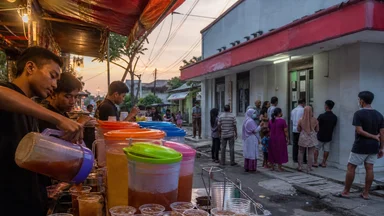
Dr. Farhana Rahman, a pulmonologist at a large public hospital in Dhaka, recalls that her clinic's waiting room fills with patients on days when the Air Quality Index crosses 300. "They come in with the same story," she says. "They wake up with a dry cough, their chest feels tight, and by midday they are gasping for air." Many are rickshaw pullers, construction workers, or street vendors who spend their entire workday outside. Their symptoms follow the seasons, improving in the monsoon and worsening in winter.
Children are especially vulnerable. A 2021 study in the journal Environmental Research found that children living within 2 kilometers of brick kilns in Bangladesh had significantly higher rates of asthma-like symptoms compared to those farther away. The study tracked nearly 1,200 children and adjusted for household smoking and socioeconomic status. The authors estimated that kiln emissions contributed to a 25% increase in the odds of wheezing. These findings align with broader research linking ambient PM2.5 to impaired lung development.
Yet the clinical response remains reactive. Patients receive inhalers, steroids, and advice to stay indoors, but the underlying exposure does not stop. The kilns operate because demand for bricks is high and cleaner technologies cost more. For the families living in the brick belt, the air they breathe is a chronic, unremitting hazard that no mask can fully filter.
Spirometers Sit Unused While Diagnoses Wait
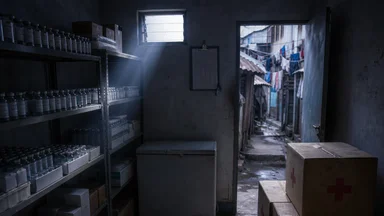
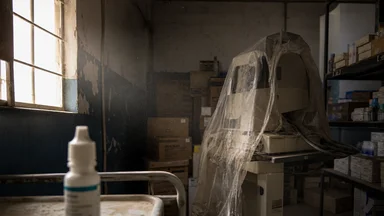
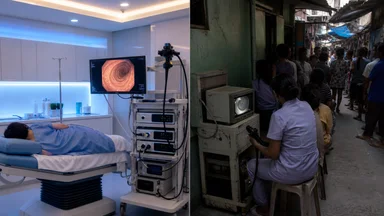
In a country where respiratory disease is a leading cause of death, the tools to measure lung function are strikingly absent. Spirometry, a simple test that measures how much and how quickly a person can exhale, is the gold standard for diagnosing COPD and asthma. It can distinguish obstruction from restriction, assess severity, and guide treatment. But in Dhaka's public clinics, functioning spirometers are rare.
A 2023 survey by the Bangladesh Lung Health Foundation found that fewer than 20% of district hospitals had a working spirometer. Many devices sat broken for years, lacking trained technicians or replacement parts. In the capital, the situation is better but still inadequate. The few available machines are concentrated in tertiary care centers, leaving the majority of patients without access.
The cost is a barrier too. A spirometry test at a private lab in Dhaka typically runs between US$ 5 and US$ 15. For a rickshaw puller earning around US$ 4 a day, that is more than a day's wage. As a result, doctors often rely on symptoms alone. They listen to the chest, ask about cough and breathlessness, and prescribe a trial of medication. This approach can miss COPD, which is frequently misdiagnosed as asthma or even tuberculosis, a common condition in Bangladesh.
The consequences are serious. Without a baseline measurement, it is impossible to track disease progression or assess whether a treatment is working. Patients may be over-treated or under-treated, and the true burden of chronic lung disease remains hidden. Public health officials have long called for broader spirometry coverage, but funding and training have lagged. The devices gather dust in storerooms while the smoke continues to fill lungs.
Rickshaw Puller's Story: A Lungs Worth Less Than a Fare
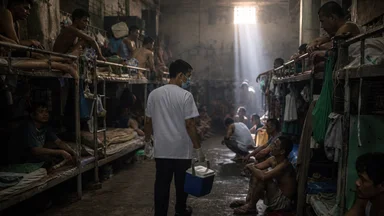
Rahim (a composite, anonymized patient based on interviews with several rickshaw pullers) is 45 and has pulled a rickshaw in Dhaka for 20 years. He lives in a slum near the city's edge, close to several brick kilns. His day starts before sunrise and ends after dark, with only short breaks for tea and a cheap meal. On most days, he covers 40 to 50 kilometers, hauling passengers through congested streets and over bridges. The physical demands are relentless.
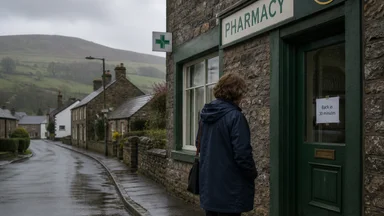
Rahim's breathing problems began about five years ago. He first noticed a cough that lingered after winter. Over time, it became harder to pedal uphill. He started to feel a tightness in his chest on foggy mornings, a sensation he describes as "someone sitting on my chest." He visited a local pharmacy, where the attendant sold him a salbutamol inhaler. It helped temporarily, but he never received a proper diagnosis.
No one has ever performed spirometry on Rahim. He has never heard of the test. When asked about his medical history, he mentions a few visits to a charitable clinic, where a doctor listened to his lungs and prescribed antibiotics for a suspected infection. The doctor did not mention COPD or asthma. Rahim continues to work, pushing through the breathlessness because he has no other source of income.
The financial strain is constant. Rahim estimates that his medical expenses, including inhalers and clinic visits, consume roughly half of his weekly earnings during the winter months. He skips doses to save money, using the inhaler only when the symptoms become unbearable. He knows the smoke is bad for him, but he cannot afford to stop working. "What else can I do?" he asks. "I have a family to feed."
Rahim's story is not unique. A 2022 survey of rickshaw pullers in Dhaka found that over 60% reported chronic cough or breathlessness, yet fewer than 5% had ever undergone lung function testing. The disconnect between symptom burden and diagnostic access is stark. These workers are the invisible backbone of the city, and their lungs are paying the price.
The Evidence Gap: What We Know and Don't About Brick Kiln Dust
Research on brick kiln emissions and health is limited but growing. A systematic review published in 2020 in the International Journal of Environmental Research and Public Health examined 14 studies from South Asia. The authors found consistent associations between proximity to kilns and respiratory symptoms, reduced lung function, and increased prevalence of asthma in children. However, most studies were cross-sectional, meaning they cannot prove causation.
COPD prevalence in Dhaka is estimated to be between 5% and 10%, according to the Bangladesh Lung Health Foundation. This is higher than the national average, which is around 4%. The elevated rate is likely due to a combination of air pollution, occupational exposures, and tobacco use. Yet the exact contribution of brick kilns remains unknown. No longitudinal cohort has tracked kiln workers or nearby residents over time to measure the cumulative impact.
Longitudinal studies are difficult to conduct in low-resource settings. They require funding, trained personnel, and long-term follow-up, all of which are scarce. But without them, policy decisions rest on shaky ground. Regulators may impose emissions limits based on modeled estimates, but they cannot quantify the health benefits of cleaner kilns. This evidence gap undermines advocacy and leaves communities without the data to demand change.
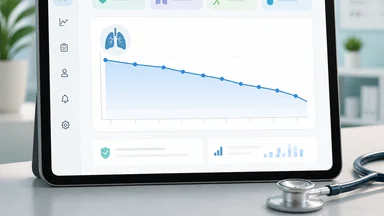
Spirometry could help fill that gap. A simple, low-cost test administered at scale would provide a baseline measure of lung health in exposed populations. It would allow researchers to track changes over time and compare outcomes across kiln types. It would also help clinicians identify individuals who need treatment. The technology is not new, but its deployment has been neglected.
Why Spirometry Matters for Treatment Decisions
Choosing the right inhaler depends on the type and severity of obstruction. In asthma, patients typically show reversible airflow limitation, meaning their lung function improves after inhaling a bronchodilator. In COPD, the limitation is largely irreversible. Spirometry can distinguish between the two with a simple test: measure FEV1 before and after bronchodilator administration. A 12% and 200 mL improvement suggests asthma.
Mistreatment has real consequences. A patient with COPD who is treated with asthma medications alone may not receive the long-acting bronchodilators that reduce exacerbations. Conversely, a patient with asthma who is given a COPD regimen may miss out on inhaled corticosteroids that control inflammation. In either case, the patient suffers and the health system bears unnecessary costs.
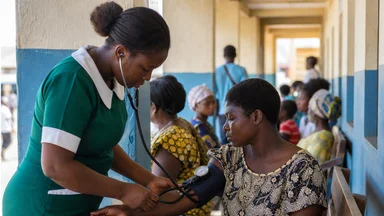
Portable spirometers are now available for around US$ 500 to US$ 2,000. They are simple to operate and can be used by nurses after brief training. The main challenges are maintenance and calibration, but these can be managed with basic protocols. A study in rural India showed that community health workers could perform spirometry with acceptable quality after a two-day course.
Expanding access to spirometry would not solve the air pollution problem, but it would improve patient care and provide essential data. It is a low-cost, high-impact intervention that has been overlooked for too long. The question is not whether to invest, but how to do it effectively.
A Low-Cost Fix: Community Spirometry Hubs
Several pilot projects in Bangladesh have demonstrated the feasibility of community-based spirometry. One such initiative, run by an NGO in Savar, a peri-urban area near Dhaka, set up a small testing room in a local health center. They trained a nurse to conduct tests and used a portable device that cost about US$ 1,200. In the first year, they tested over 1,000 patients, many of whom had never received a lung function assessment.
The hub operates twice a week and can test roughly 50 patients per day. The cost per test, including staff time and consumables, drops below US$ 2 when volume is high. This is a fraction of the price at private labs. The results have been eye-opening. Over 30% of the tested patients had evidence of moderate to severe obstruction, and many were already on inadequate treatment.
Mobile units could extend the reach even further. A van equipped with a spirometer and a trained technician could visit the brick belt during the dry season, when exposure peaks. Such units have been used successfully in other countries for tuberculosis screening. The infrastructure is not expensive, and the demand is evident.
Scaling these pilots would require political will and modest funding. The government has shown interest in improving air quality, but health sector investment remains skewed toward curative care. A small allocation for diagnostic equipment could yield substantial returns. The technology is proven; the will is the missing piece.
Cleaner Kilns, Better Lungs, and a Call to Measure
Improved kiln designs, such as the vertical shaft brick kiln or the hybrid Hoffman kiln, can cut emissions by roughly 30% to 50% compared to traditional clamps. They also use less fuel, making them economically attractive in the long run. The government has offered incentives for cleaner technology, including tax breaks and low-interest loans. Yet adoption remains slow, partly due to the upfront costs.
If policymakers could see the health benefits in numbers, the case for cleaner kilns would strengthen. A spirometry-based surveillance system could track lung function in communities near kilns, providing before-and-after data as new technologies are introduced. This would create a feedback loop: show that cleaner kilns improve lung health, and the incentive to convert grows.
But the health impact today remains unmeasured. No one can say with certainty how many cases of COPD in Dhaka are attributable to brick kiln smoke. The estimates are rough, and the uncertainty fuels inaction. Investing in spirometry would change that. It would give a voice to the patients who cannot afford private tests and a tool to the researchers who need data.
Every lung counted is a step toward breathable air. The task is not glamorous, but it is essential. As Dr. Rahman puts it, "We cannot treat what we do not measure." The smoke will keep rising from the kilns, but the spirometers need not stay idle. What will it take to bring spirometry to every clinic in Dhaka? How many more winters must pass before the data drives action? The answers depend on whether we choose to measure.
This article is for informational purposes only and is not a substitute for professional medical advice. Always consult a qualified healthcare provider for diagnosis and treatment.