Psychiatry Residents Staff Punjab’s Telehealth Triage While In-Patient Beds Sit Empty
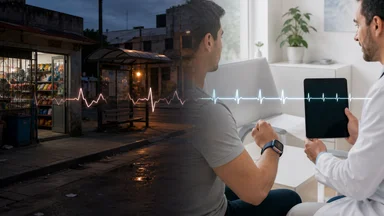
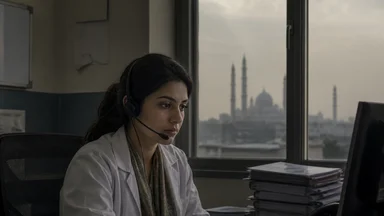
In the cramped residents' office on the third floor of Lahore's Mayo Hospital, a phone rings roughly every few minutes. The caller might be a farmer from Khanewal describing his son's sleepless nights, a schoolteacher in Sargodha worried about her own intrusive thoughts, or a shopkeeper in Multan who has not left his house in weeks. The resident on duty listens, asks a scripted set of risk questions, and decides whether the person needs urgent referral, a scheduled appointment, or simply reassurance. This is the primary entry point of Punjab's public mental-health system, and it is staffed by trainees who are learning psychiatry on the job.
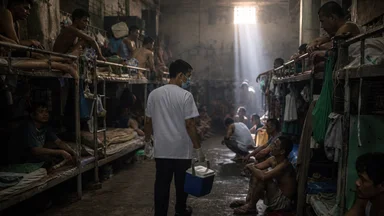
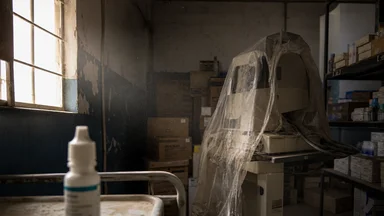
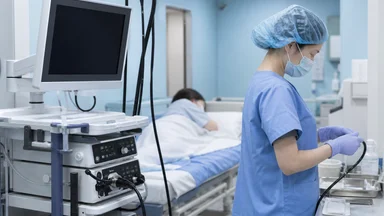
Meanwhile, a few floors below, the inpatient psychiatric wards sit at roughly half their capacity. Beds reserved for severe episodes of depression, psychosis, or mania remain empty for days at a time. The contrast is stark: a telephone line that never stops ringing and wards that rarely fill. This mismatch defines mental-health care across Punjab, Pakistan's most populous province, and it raises an uncomfortable question for health planners: are we building the wrong kind of system for the people who need it most?
The telehealth triage line, launched in 2021 as a pilot under the provincial health department, was meant to be a stopgap. It would handle calls from districts with no psychiatrist, triage the most urgent cases, and direct patients to care. But the pilot has become the permanent reality. Residents in psychiatry at Mayo Hospital, one of the province's oldest and busiest teaching hospitals, now spend a significant portion of their rotations answering calls, logging symptoms, and making referral decisions. Their training, designed around ward rounds and bedside teaching, has been quietly reshaped by the demands of a phone that will not stop ringing.
The empty beds are a separate puzzle. Public psychiatric wards in Punjab have historically been overcrowded, with patients sleeping on floors in the worst years. But a combination of stigma, distance, and referral bottlenecks has inverted the pattern. Families now fear hospital admission more than they fear untreated illness, seeing it as a mark of shame or a sign that their relative is beyond help. Travel to a tertiary centre like Lahore costs time and money that many rural households cannot spare. And primary-care doctors, who are the first point of contact for most patients, rarely refer for inpatient care, partly because they lack training in recognising severe mental illness and partly because they assume the beds are full. The result is a system where the most acute patients never reach the wards that were built for them.
A Triage Line That Never Stops, Wards That Rarely Fill
The Punjab teletherapy pilot, as it is officially called, was designed to extend mental-health services beyond the provincial capital. It is staffed by psychiatry residents at Mayo Hospital, with backup from senior faculty who are on call but often not physically present. The line operates in shifts, covering early morning to late night, and residents describe it as relentless. A single shift can involve dozens of calls, each one requiring a rapid assessment of suicide risk, psychosis, or danger to others. The residents use a structured checklist adapted from the World Health Organization's mental health gap action programme (mhGAP), which endorses task-sharing and simplified protocols for low-resource settings.
But the checklist has limits. It is designed to flag red flags, not to build a therapeutic relationship. A resident can ask the standard questions about sleep, appetite, and thoughts of self-harm, but they cannot see the patient's facial expression, hear the tremor in their voice, or gauge the family dynamics that might be driving the crisis. The phone strips away the non-verbal cues that psychiatrists rely on, and residents are left to make high-stakes decisions with incomplete information. This limitation is a recurring theme in the literature on telepsychiatry, which consistently notes that video consultations, while better than phone, still miss some cues. In Punjab, the reliance on voice alone is a direct consequence of the digital divide, where many callers use basic mobile phones with no video capability.
The wards, by contrast, are quiet. At Mayo Hospital, the male and female psychiatric wards together have around 80 beds, but occupancy has hovered near half for much of the past two years, according to hospital staff who track admissions informally. The beds are reserved for severe cases: catatonia, acute mania, severe depression with psychotic features. But those patients are not arriving. Some are being managed entirely by phone, with residents prescribing medications that are collected from district pharmacies. Others are being cared for by traditional healers or simply left at home. The empty beds are not a sign that the province has solved its mental-health crisis; they are a sign that the crisis is being hidden.
The mismatch has practical consequences. Residents who should be learning to manage inpatient crises, to observe the course of illness, to adjust medications under direct supervision, are instead spending their days on the phone. They are learning triage skills, which are valuable, but they are not learning the full spectrum of psychiatric practice. And patients who might benefit from a short inpatient stay for stabilisation are being denied that option, either because they do not know it exists or because the system has effectively routed them away from it.
Why the Beds Are Empty: Stigma, Distance, and Referral Bottlenecks
Stigma is the first barrier. In Punjab, mental illness is often seen as a personal failing or a punishment for past sins. Families worry that admitting a relative to a psychiatric ward will mark them for life, affecting marriage prospects for the patient and their siblings. This fear is not unfounded: a hospital record can follow a person for decades, and the word "psychiatric" on a file is enough to close doors. As a result, families often wait until a crisis becomes unmanageable, and even then they may seek help from a faith healer or a general physician who prescribes sedatives without a full assessment.
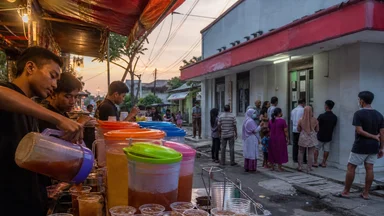
Distance is the second barrier. Punjab is a large province, and most psychiatric services are concentrated in Lahore, with smaller units in Multan, Rawalpindi, and Faisalabad. A patient from a rural district like Rajanpur or Dera Ghazi Khan may have to travel 300 kilometres or more to reach a specialist. The cost of transport, lost wages, and accommodation for a family member can easily exceed a month's income. For many households, the phone line is the only affordable option, and even that requires a working mobile phone and enough credit to make the call.
Referral bottlenecks are the third barrier. Primary-care doctors, who staff the basic health units and rural health centres across the province, receive minimal training in mental health. They may recognise that a patient is distressed, but they rarely have the tools to assess severity or the confidence to refer for inpatient care. The mhGAP guidelines recommend that primary-care workers be trained to identify and treat common mental disorders, but implementation has been patchy. A 2023 survey of primary-care physicians in Punjab, conducted by the provincial health department, found that fewer than one in five had received any formal training in mental health in the past five years. Most said they would refer a patient to a psychiatrist only if the patient explicitly asked for one, which is rare.
The result is a funnel that narrows at every step. The phone line catches some patients who would otherwise fall through the cracks, but it cannot replace a functioning referral pathway. Beds sit empty because the patients who need them are not being referred, and the patients who need them are not being referred because the system has no way to identify them. It is a vicious cycle, and residents on the triage line are its unwilling operators.
The Telehealth Triage: What the Evidence Actually Shows
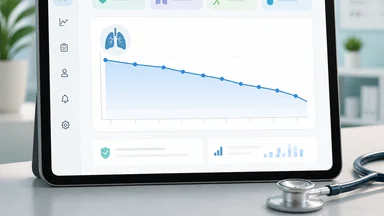
Telehealth triage has a respectable evidence base in high-income settings. Systematic reviews of phone-based triage for mental-health crises have found that it can reduce wait times for treatment, improve access for rural populations, and, in some cases, lower rates of suicide attempts. A 2021 Cochrane review of telephone support for people with mental-health conditions, which included studies from the UK, Australia, and the US, found a modest but consistent benefit in reducing distress and improving engagement with services. Effect sizes were small to moderate, with standardised mean differences typically in the range of 0.2 to 0.4, but they were real.
However, the evidence for low-resource settings is thin. Most of the studies that inform clinical practice come from countries with robust telephone infrastructure, well-trained call centre staff, and integrated electronic health records. Punjab has none of these in full measure. Calls drop, connections are poor, and residents often have to make do with a single conversation that may be cut short. The mhGAP programme, which the triage line uses as a reference, has been evaluated in several low- and middle-income countries, including Nepal and Ethiopia, and it has shown promise in improving detection and treatment of common mental disorders. But those evaluations were for in-person task-sharing, not for phone-based triage.
The key insight from the evidence is that technology alone does not fix workforce shortages. A phone line can extend the reach of a psychiatrist, but it cannot replace the judgment that comes from repeated face-to-face contact. Residents on the triage line are making decisions that in a better-resourced system would be made by a senior psychiatrist with the benefit of a full assessment. The evidence suggests that task-sharing can work, but it requires adequate training, supervision, and feedback loops. In Punjab, those elements are often missing.
There is also a risk of over-reliance on triage as a substitute for treatment. A call that ends with a reassurance is not a cure. The evidence shows that phone-based interventions work best when they are linked to ongoing care, whether that is a follow-up call, a community visit, or a referral to a local provider. In Punjab, the triage line is often the end of the road, not the beginning. A resident can assess risk and recommend a course of action, but if there is no psychiatrist in the district, no community health worker to check in, and no bed available, the recommendation is an empty promise.
Residents as the Frontline: Training by Accident, Not Design
Psychiatry residency in Pakistan is a four-year programme, with rotations in inpatient, outpatient, consultation-liaison, and community psychiatry. The curriculum, set by the College of Physicians and Surgeons Pakistan, does not include a dedicated module on telehealth triage. Residents learn crisis de-escalation by trial and error, guided by senior residents who themselves learned the same way. Supervision is intermittent and mostly remote: a faculty member may be present for part of the shift, but they are often in meetings or on the wards, and the resident on the phone is expected to handle most calls independently.
This is training by accident, not design. The triage line has become a de facto rotation because the service needs to be staffed, and residents are the cheapest and most flexible workforce available. But the skills they are learning, rapid risk assessment, phone etiquette, the ability to make decisions under uncertainty, are not formally taught or assessed. A resident who struggles with the phone may receive no feedback until a crisis occurs. A resident who excels may be rewarded with more phone shifts, which is not necessarily a good outcome for their development.
Burnout is a real concern. The triage line is emotionally demanding, and residents describe a phenomenon they call "triage fatigue": the sense that every call is a potential emergency, and that a wrong decision could be catastrophic. A 2024 internal survey at Mayo Hospital, which has not been published, found that more than two-thirds of psychiatry residents reported symptoms of burnout, with the highest rates among those who spent the most time on the triage line. The survey was small, and the results should be treated with caution, but they align with broader research on the mental health of medical trainees in South Asia.
The training gap is not just a problem for residents; it is a problem for patients. A resident who has never been taught how to structure a phone assessment may miss a key question about suicidal ideation. A resident who has never seen a patient with catatonia may not recognise the signs when they are described over the phone. The evidence from high-income settings suggests that structured training can improve the accuracy of phone triage, but such training is rare in Punjab. The result is a system that relies on the goodwill and improvisation of trainees, rather than on a deliberately designed educational model.
The Access Gap Beyond Lahore: Where the Calls Come From
Data from the Punjab health department, shared with reporters under a non-disclosure agreement, show that the majority of calls to the triage line originate from rural districts, not from Lahore. In the first six months of 2025, roughly 60% of calls came from districts with no psychiatrist at all, such as Bahawalnagar, Layyah, and Muzaffargarh. These are areas where the per-capita psychiatrist ratio is far below the WHO target of one per 10,000 people; in some districts, there is no psychiatrist within 200 kilometres.
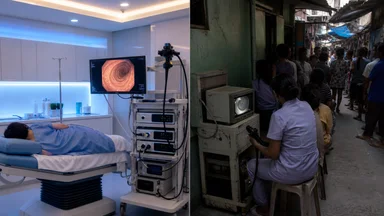
Telehealth has the potential to reach these areas, and the call data suggest it is doing so. But digital access is uneven. Most calls come from mobile phones, and many are made from shared devices or in public places, which limits what the caller is willing to say. Calls frequently drop, and residents report that they often have to call back multiple times to complete an assessment. The digital divide is not just about access to a phone; it is about the quality of the connection, the privacy of the space, and the comfort of the caller in speaking openly.
Rural uptake has been higher than expected, which is encouraging, but it has also exposed a gap in follow-up. A resident may assess a patient over the phone and recommend that they visit a district hospital, but if that hospital has no mental-health services, the patient is back to square one. The triage line can identify need, but it cannot create capacity. Some districts have tried to address this by training community health workers, known as lady health workers, to provide basic mental-health support, but the programme is small and underfunded.
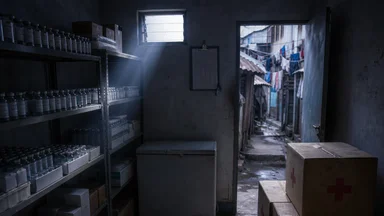
The access gap is not just geographic; it is also financial. Even when a patient is referred to a tertiary centre, the cost of treatment can be prohibitive. Public hospitals charge minimal fees, but patients often have to pay for medications, which are not always available in the hospital pharmacy. A course of antipsychotic medication can cost more than a rural family's monthly income, and residents on the triage line are often forced to prescribe the cheapest available option, regardless of its side-effect profile or efficacy.
Reallocating the Empty Beds: A Pragmatic Path Forward
The empty beds are a wasted resource, but they could be repurposed. Instead of reserving them for severe cases that never arrive, hospitals could use them for short-stay crisis stabilisation. Patients who are assessed over the phone and judged to be at moderate risk could be offered a two- or three-day admission for observation, medication adjustment, and connection to follow-up care. This would give residents the inpatient experience they need, and it would give patients a safe place to stabilise without the stigma of a long-term commitment.
Shifting residents to supervised inpatient rotations would also address the training gap. Residents need to learn how to manage acute agitation, how to use seclusion and restraint appropriately, and how to build a therapeutic alliance with a patient who is in the room, not just on the phone. These skills are best learned in person, with a senior psychiatrist available for consultation. The triage line could still be staffed by residents, but as a structured rotation with clear learning objectives, regular supervision, and feedback on every call.
Pairing telehealth with community follow-up workers is another pragmatic step. The evidence from mhGAP programmes in other countries suggests that task-sharing works best when there is a local person who can check on the patient between calls. In Punjab, lady health workers could be trained to provide basic support and to alert the triage line if a patient deteriorates. This would extend the reach of the residents without requiring them to be everywhere at once.
Finally, the system should measure outcomes. The triage line currently logs calls, but it does not track what happens to patients afterward. Readmission rates, symptom scores, and suicide attempts are all measurable, and they would tell health planners whether the reallocated beds and the telehealth line are actually improving care. Without such data, the debate about how to use resources will continue to be driven by anecdote and assumption.
What a Resident Learns From a Phone That Won't Stop Ringing
The triage line teaches rapid risk assessment under pressure, and that is not nothing. A resident who has handled a hundred calls about suicidal ideation will leave with a sharpened ability to distinguish the person who needs immediate intervention from the person who can wait. That skill is valuable in any psychiatric setting, and it is a credit to the residents who have built it on their own.
But the phone cannot teach everything. It cannot teach the subtlety of a therapeutic relationship, the patience of a ward round, or the art of negotiating with a reluctant family. Residents who spend most of their training on the phone may graduate with a skewed view of what psychiatry is: a series of triage decisions rather than a long-term engagement with patients and families. That is a loss for them and for the profession.
The system must value both virtual and in-person care. Telehealth is not a substitute for inpatient psychiatry, and inpatient psychiatry is not a substitute for telehealth. They are complementary, and a balanced training model would expose residents to both. The triage line is a legitimate and necessary service, but it should be a rotation, not the whole of a resident's experience.
A balanced approach would benefit patients and trainees alike. Patients would get the benefit of a resident who has seen the full spectrum of illness, not just the voices on the phone. Residents would get the benefit of a curriculum that prepares them for the reality of practice, whether that is in a tertiary hospital or a rural district. The empty beds are a symptom of a system that has lost its way; the phone line is a symptom of the same problem. Both need to be addressed, and neither can be fixed in isolation.
Yet one might ask whether the empty beds are truly a problem to be solved, or a sign of a system adapting to new realities. Perhaps the decreasing reliance on inpatient care is a positive development, reflecting a shift toward community-based treatment and a recognition that many acute crises can be managed without hospitalisation. In some high-income countries, psychiatric bed numbers have been deliberately reduced as part of a policy of deinstitutionalisation, with mixed results. Could Punjab be an unintended pioneer of this trend? The answer is unclear, but the question deserves serious consideration. If the empty beds are simply a result of stigma and access barriers, then they represent a failure of the system. But if they reflect a genuine change in how mental-health care is delivered, then the solution may not be to refill them, but to plan for a future with fewer beds and more community services. This counter-perspective is not often heard in discussions about mental-health resources, but it is worth exploring before committing to a path that may be based on outdated assumptions.
This article is for informational purposes only and is not a substitute for professional medical advice, diagnosis, or treatment. Always seek the advice of a qualified health provider with any questions you may have regarding a medical condition.